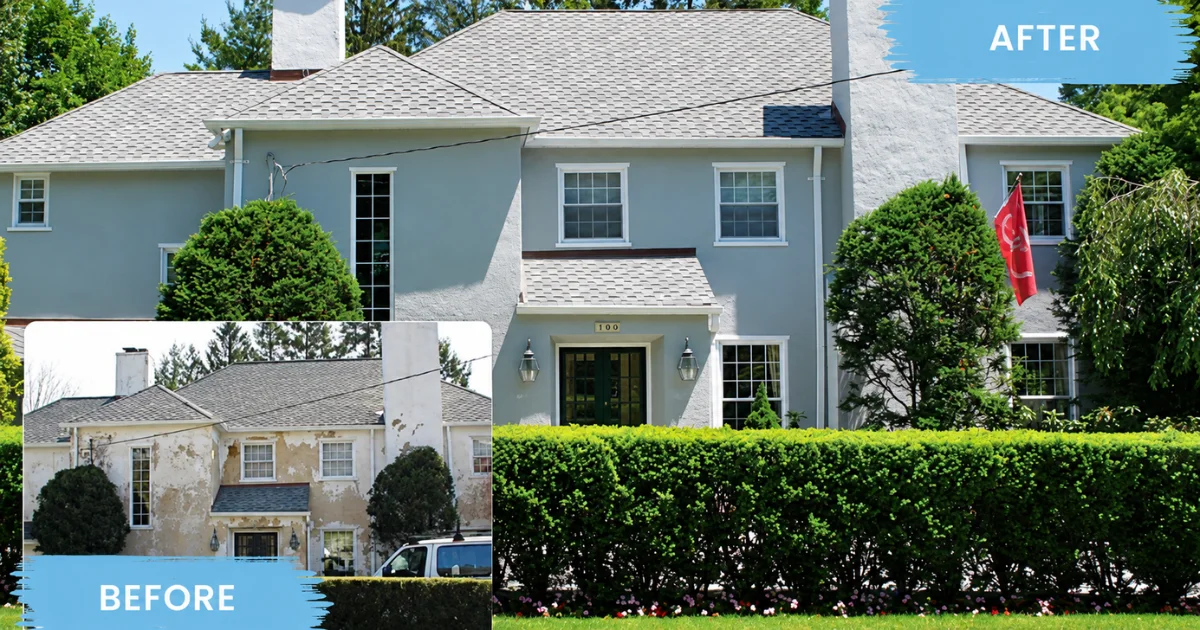
A stucco home that still looks beautiful years after it was painted usually has more going for it than a good can of paint. The biggest difference often comes from what happened before anyone opened that can.
Stucco is not the same as wood siding, vinyl, or another typical exterior surface. It is a masonry material that can absorb moisture, release moisture, crack, weather, and react to coatings in ways that affect how long a paint job lasts.
That is why homeowners searching for local stucco painting in New York and Connecticut should look beyond color choices and estimates.
The more important questions are: What condition is the stucco in? Is moisture getting into the wall? Is it traditional stucco or a synthetic system? What repairs are needed? And is the proposed coating appropriate for that particular surface?
At A.G. Williams Painting Company, we have been painting homes since 1906. Experience has taught us that a successful stucco project starts by understanding the wall before deciding how to paint it.
Here are seven things homeowners should check before moving forward with exterior stucco painting.
1. Make Sure New or Patched Stucco Is Ready for Paint
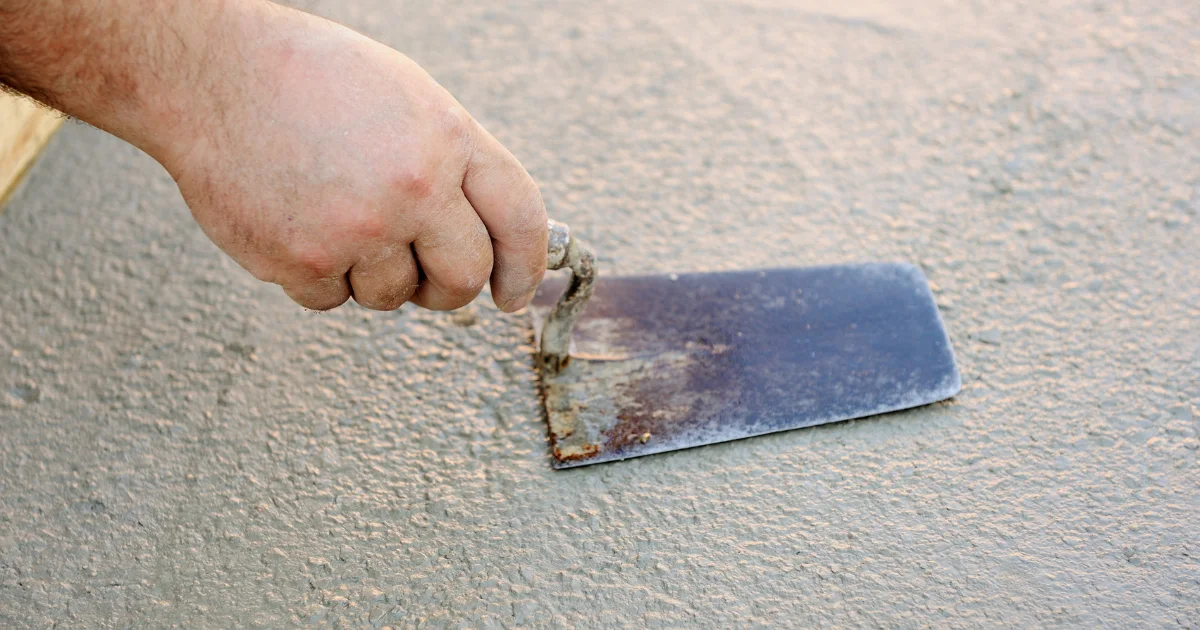
New stucco and recently patched areas cannot always be treated like an older, previously painted wall.
Fresh cement-based stucco is highly alkaline. Applying the wrong coating too soon can cause premature coating failure, discoloration, or poor adhesion.
A common guideline is to allow new stucco to cure for approximately 30 days before applying a conventional coating system. Sherwin-Williams notes that new masonry surfaces generally need time to cure and that alkalinity can damage coatings that are not designed for those conditions.
There are exceptions.
Certain masonry primers and coatings are specifically designed to tolerate higher alkalinity. For example, Sherwin-Williams publishes masonry products that can be applied to hard, dry stucco at higher pH levels, allowing painting to begin sooner when the product specifications and surface conditions permit it.
That does not mean cure time can simply be ignored. It means the painting contractor should understand the surface and choose a coating system designed for its condition.
If your home has new stucco or recent repairs, ask your contractor:
- How long has this area cured?
- Is the stucco dry enough to paint?
- Does its alkalinity need to be checked?
- What primer or coating will be used on the repaired areas?
A contractor should be able to explain the reasoning behind the proposed system rather than simply saying the wall is ready.
2. Understand What the Stucco Cracks Are Telling You
Cracks are common in stucco, and not every crack is a major problem.
The important question is why the crack formed.
Hairline and Spider Cracks
Fine cracks across the surface can develop from shrinkage, age, minor movement, and years of exposure to changing weather.
These cracks may be repairable as part of normal surface preparation. Once the wall has been evaluated, loose material can be removed, appropriate cracks can be repaired, and the surface can be prepared for coating.
Cracks That Deserve More Attention
Some conditions should be investigated before they disappear beneath fresh paint.
Watch for:
- Cracks wider than roughly one-eighth of an inch
- Diagonal cracks extending from windows or doors
- Stucco that bulges or feels loose
- Areas that sound noticeably hollow
- Recurring cracks in previously repaired locations
- Concentrated staining or mildew
- White mineral deposits on the surface
- Stucco that remains damp or deteriorates repeatedly
These conditions may point to movement or unwanted moisture.
Painting over the symptom does not correct the source.
For example, if water is entering around a window, roof edge, gutter, flashing detail, or another opening, repairing the stucco and applying paint without addressing the water source can allow the same problem to return.
Good local stucco painting therefore involves more than filling every visible crack. The contractor should determine which cracks are normal surface issues and which ones deserve additional investigation.
3. Determine Whether You Have Traditional Stucco or EIFS
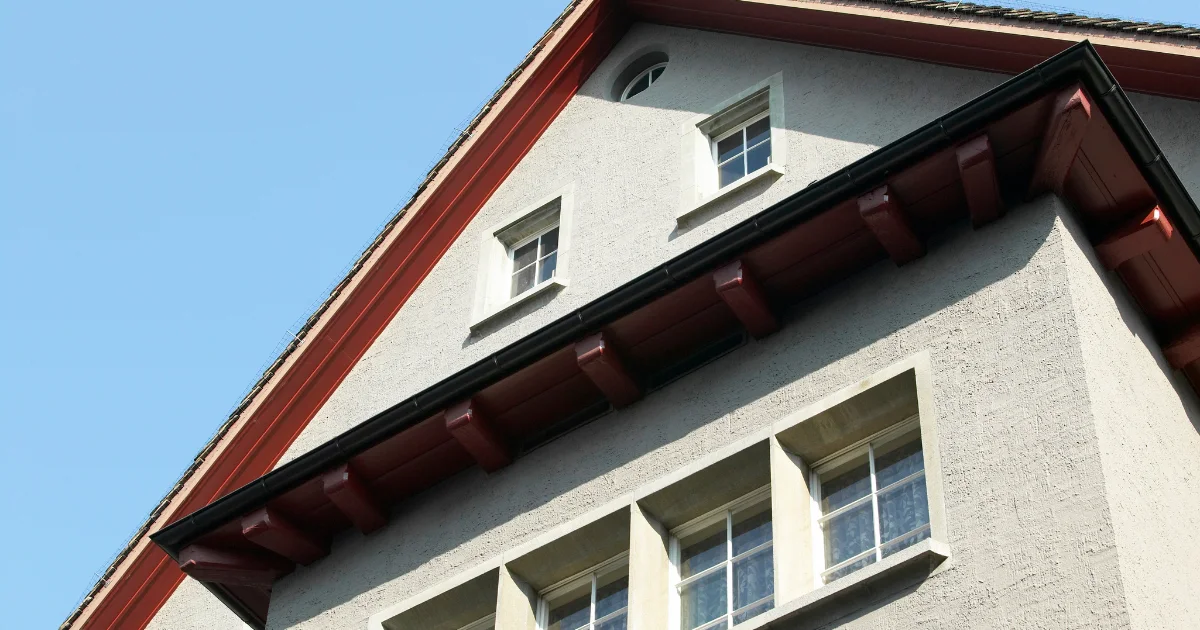
Traditional stucco and synthetic stucco can look remarkably similar from the street, but they are not the same wall system.
Traditional stucco generally consists of cement-based plaster applied over a supporting assembly. It tends to feel hard and solid.
EIFS stands for Exterior Insulation and Finish System. It typically incorporates insulation board and a reinforced finish system rather than a thick cement plaster surface.
Why does the distinction matter?
Because the wall assembly affects how moisture is managed and which repair and coating products should be used.
An experienced contractor may look at several details to help identify the system, including its construction, termination points, thickness, feel, and existing finish. When the answer is uncertain, further investigation may be appropriate.
Homeowners should be cautious about relying on a single DIY test to make the determination. A tap test or visual inspection can provide clues, but it may not tell the entire story.
Before approving a coating system, ask:
“Is this traditional stucco or EIFS, and how does that affect the products you plan to use?”
The contractor should have a clear answer.
4. Choose a Stucco Coating That Works With the Wall
Stucco needs protection from weather, but the coating system also needs to be appropriate for masonry.
Moisture is one of the biggest reasons this matters.
Water can reach a wall from rain, leaks, failed sealant, damaged gutters, roof problems, flashing issues, or other building conditions. Depending on the construction, moisture can also move through masonry.
A coating should not be treated as a substitute for fixing an active leak.
Quality exterior acrylic coatings formulated for masonry are commonly used on properly prepared stucco because they provide weather resistance while remaining appropriate for the surface.
Sherwin-Williams, for example, explains how alkaline masonry can damage conventional coatings and describes primers formulated to tolerate higher pH levels.
What About Elastomeric Coatings?
Elastomeric coatings are thicker systems that can help bridge small cracks and provide strong resistance to wind-driven rain.
They can be useful in the right situation.
But thicker does not automatically mean better.
If moisture is entering a wall because of a building problem, applying a heavy coating does not repair the source. The water intrusion should be corrected before the wall is coated.
The same care is important when working with EIFS. The existing system, manufacturer requirements, wall condition, and moisture management strategy should all be considered before choosing a coating.
Elastomeric coating is a tool, not a universal cure for every stucco problem.
5. Make Surface Preparation Part of Your Local Stucco Painting Plan
Even an excellent exterior paint can fail when it is applied over a poorly prepared surface.
Stucco can accumulate:
- Dirt
- Mildew
- Loose paint
- Chalk from deteriorating coatings
- Efflorescence
- Biological growth
- Loose or deteriorated stucco
All of those conditions can interfere with adhesion.
Efflorescence is the white or powdery mineral deposit that sometimes appears on masonry surfaces as moisture moves through the material and evaporates. Simply painting over it does not address why it formed.
Preparation should therefore focus on creating a clean, dry, and sound surface before primer or finish paint is applied.
Can Stucco Be Pressure Washed?
Yes, but pressure needs to be controlled.
More pressure is not necessarily better.
Aggressive washing can damage a textured finish, erode weakened stucco, or force water through existing openings. Older homes and deteriorated areas may require an especially careful approach.
The objective is not to use the most powerful machine possible. It is to remove contaminants without damaging the surface.
The wall also needs sufficient drying time after washing.
Weather matters too. Temperature, rain, humidity, direct sunlight, and overnight conditions can affect application and curing. Your contractor should follow the requirements of the specific primer and coating being used rather than relying on one temperature rule for every product.
6. Check Lead-Safe Requirements for Older NY and CT Homes
If your home was built before 1978, lead-safe work practices need to be part of the conversation.
The U.S. Environmental Protection Agency's Renovation, Repair and Painting Rule applies to covered renovation work in pre-1978 housing when painted surfaces are disturbed beyond specified limits, unless an applicable exemption or documented lead free determination applies.
For exterior work, the EPA's minor repair and maintenance exception generally applies only when 20 square feet or less of painted surface is disturbed. Larger exterior preparation projects on covered pre-1978 homes can therefore fall under the RRP requirements.
This is particularly important during painting preparation because scraping, sanding, repair work, and removal of deteriorated coatings can disturb old painted surfaces.
For covered projects, contractors are required to follow applicable certification, training, containment, cleanup, and lead-safe work practice requirements.
If you own an older home, ask your painting contractor about lead-safe procedures before the project begins.
A professional contractor should be able to explain how the age of your home affects preparation and what precautions will be taken.
7. Look for a Detailed Written Stucco Painting Scope
The final check is not on the wall.
It is in the proposal.
A professional stucco painting proposal should make it easy to understand what you are paying for and what will happen before the finish coat is applied.
Look for a scope that addresses:
- Washing and surface cleaning
- Loose coating removal
- Crack repair
- Stucco patching where needed
- Drying or cure time for repairs
- Priming or conditioning
- The proposed finish coating
- Number of coats where specified
- Areas included in the project
- Repairs or services that are excluded
- How additional damage discovered during the project will be handled
This level of detail becomes especially valuable on older homes.
Sometimes deterioration is more extensive than it appears from the ground. If additional repairs are discovered after access equipment is in place or loose material is removed, you should know how those repairs will be documented, priced, and approved.
Clear communication before painting begins helps prevent surprises later.
Local Stucco Painting With A.G. Williams Painting Company
A.G. Williams Painting Company has been family-owned since 1906. Today, we serve homeowners throughout Westchester, Rockland, Putnam, Dutchess, and Bronx counties in New York, as well as Fairfield County, Connecticut.
More than a century in the painting business has taught us that the coating itself is only one part of a successful exterior project.
The condition of the surface, surface preparation, repair work, product selection, weather, scheduling, and communication all matter.
When evaluating a stucco exterior, our team looks at the wall before recommending how to coat it. We consider the existing surface, cracking, previous coatings, repairs, signs of moisture, and other conditions that can affect the finished project.
Our exterior house painting services include careful preparation and professional application for a range of exterior surfaces, including stucco and masonry.
Where complementary repairs are needed, defining those items before coating helps create a more complete project plan.
Just as importantly, homeowners know who is managing the work and how to get questions answered throughout the project.
A.G. Williams Painting Company also backs qualifying residential painting work with our 5-year warranty on workmanship.
Our goal is not simply to make a stucco home look better on the day the project finishes. It is to complete the preparation and painting correctly so the finished exterior can continue looking good through the demanding weather conditions New York and Connecticut homes experience.
When Is the Best Time to Paint Stucco in NY and CT?
Exterior stucco painting is generally best scheduled when weather conditions provide an appropriate window for preparation, application, and curing.
In New York and Connecticut, spring through fall typically provides the greatest number of workable exterior painting days. However, the calendar alone should not determine when a project starts.
Surface temperature, rain, humidity, overnight temperatures, and the specifications of the selected coating all matter.
This becomes particularly important with stucco because washing, patching, and other repairs may require additional drying or curing time.
Planning the project early can also make it easier to complete necessary repairs before weather becomes less predictable later in the season.
Frequently Asked Questions About Stucco Painting
How long should new stucco cure before painting?
Approximately 30 days is a common guideline for conventional coating systems. However, certain masonry primers are formulated for application to hard, dry stucco before a full 30-day cure when the surface meets the product's requirements. The correct approach depends on the condition of the stucco and the coating system being used.
Do you have to prime stucco before painting?
Not every previously painted stucco wall requires the exact same primer. Bare stucco, repairs, chalky areas, and new masonry often need a masonry primer or conditioner. Sound previously painted surfaces may allow a different approach depending on the selected coating. The contractor should match the preparation and primer to the condition of the wall.
Is elastomeric paint good for stucco?
It can be. Elastomeric coatings can bridge small cracks and provide excellent weather resistance on appropriate stucco surfaces. They should not be used as a substitute for repairing active leaks or other moisture problems.
How can I tell whether my home has traditional stucco or EIFS?
Traditional stucco generally feels hard and solid, while EIFS incorporates insulation and a thinner exterior finish. Tapping, inspecting edges, and looking at construction details can provide clues, but homeowners should avoid relying on a single test when choosing a coating system. A knowledgeable contractor should evaluate the wall.
Can stucco be pressure washed before painting?
Yes. Stucco can often be washed as part of preparation, but the pressure should be appropriate for the condition and texture of the surface. Excessive pressure can damage stucco or force water into cracks and openings.
Should stucco cracks be repaired before painting?
Yes, appropriate cracks should be addressed during preparation. More significant or recurring cracks may need additional investigation before painting because they can indicate movement or moisture problems.
How often should stucco be repainted?
There is no single repainting schedule for every stucco home. Exposure, previous coatings, moisture, color, surface preparation, and maintenance all affect coating life. Regularly inspecting the exterior for fading, chalking, cracking, peeling, and moisture-related deterioration is more useful than relying on a fixed number of years.
Ready to Talk About Your Stucco Exterior?
If you are considering local stucco painting in Westchester, Rockland, Putnam, Dutchess, or Bronx County in New York, or Fairfield County in Connecticut, start with an evaluation of the wall itself.
A.G. Williams Painting Company can help identify the preparation and repair needs, recommend an appropriate coating system, and provide a clear scope for the project.
Request an exterior painting proposal from A.G. Williams Painting Company and find out what your stucco exterior needs before the first coat goes on.