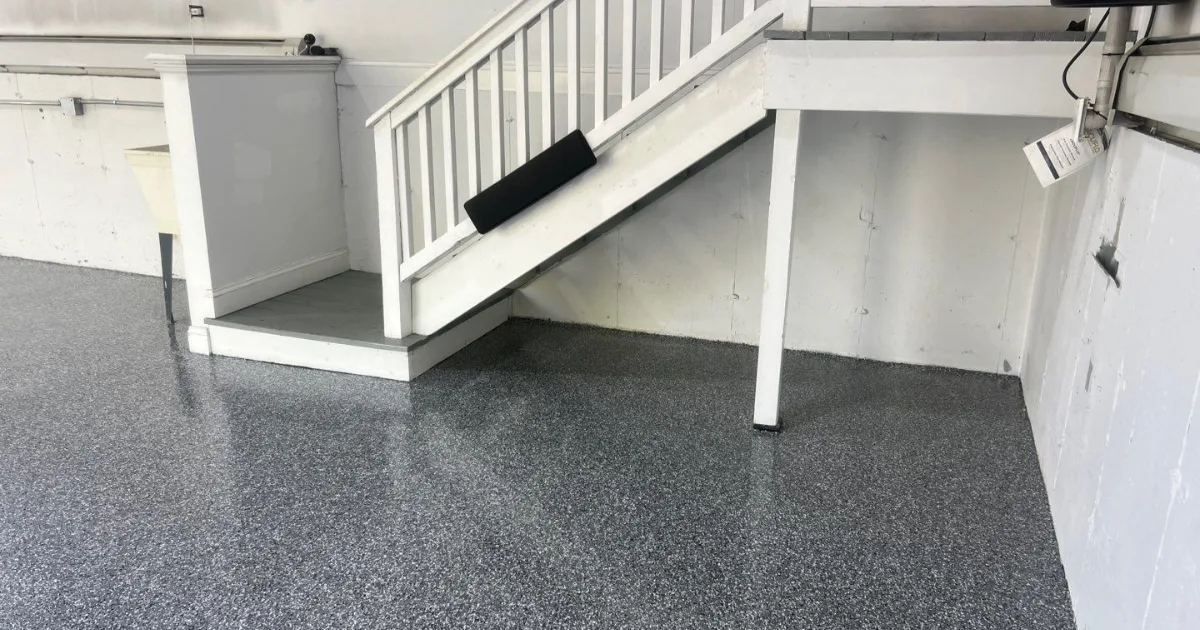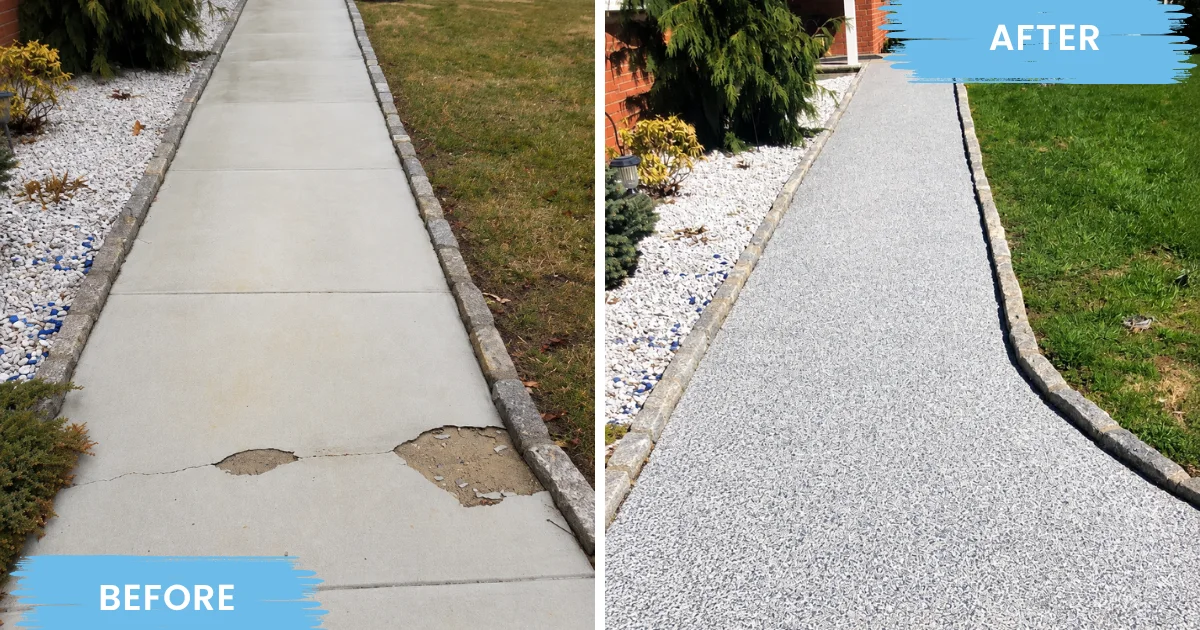
Most damaged concrete can be coated successfully. The question is not whether the floor looks rough today. It is whether the concrete underneath is sound, stable, dry enough, and properly prepared to hold a coating.
That distinction matters.
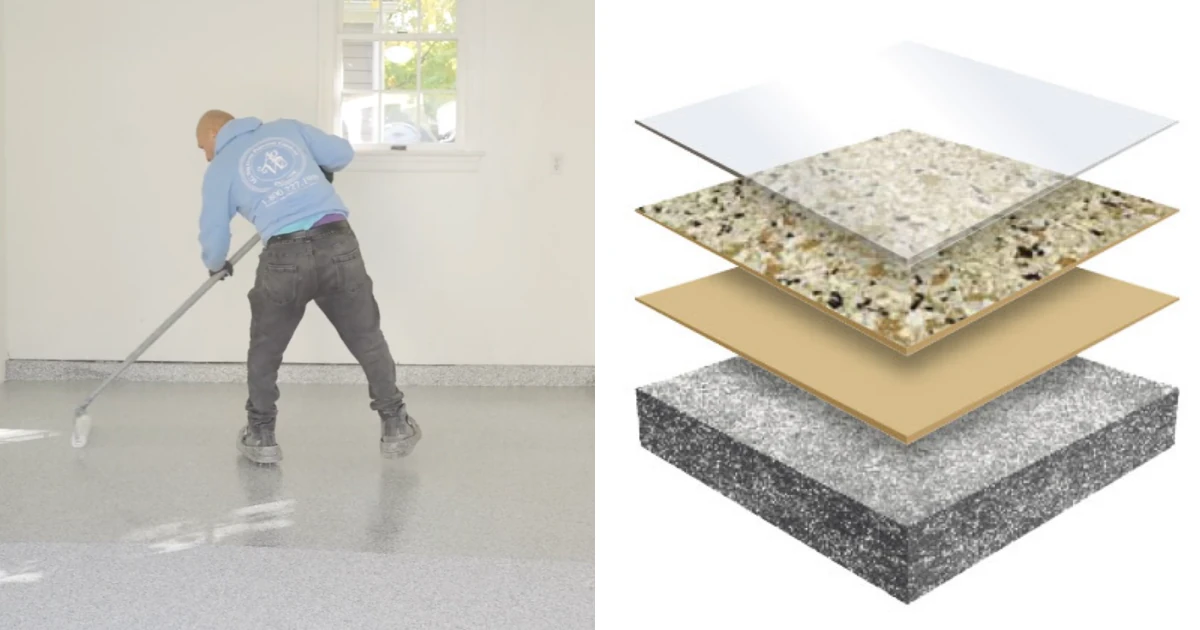
Coating damaged concrete is really two jobs: repair first, finish second. Cracks and pits may need to be filled. Loose or delaminated concrete has to come out. Oil, old sealers, and previous coatings have to be removed. The surface then needs the right profile so the new coating can bond directly to sound concrete.
Skip those steps, and the finished floor may eventually fail in the same areas that were already causing trouble.
Fortunately, cracks, pitting, staining, and even some surface deterioration do not automatically rule out a floor coating. The following eight conditions tell us much more about whether a slab is a good candidate—and what needs to happen before coating begins.
Why the Concrete Matters More Than the Coating
A floor coating is only as dependable as the surface underneath it.
If that surface is loose, contaminated, sealed, or affected by excessive moisture, even a high-quality coating system can have trouble performing as intended.
That is why surface preparation receives so much attention in professional coating work. Graco’s guidance on sound and unsound concrete explains that damaged areas may extend beyond what is visible from the surface. Tapping, scraping, or sounding the concrete can reveal weak or delaminated sections that need to be removed before a repair or coating goes down.
For a homeowner, that means a walkthrough should be about much more than choosing a color.
An experienced estimator is looking at where moisture may be coming from, how the cracks behave, whether an old coating or sealer is present, how much surface deterioration has occurred, and what preparation the floor will require.
Here are the eight conditions that matter most.
1. Cracks: Most Can Be Repaired, but Movement Matters
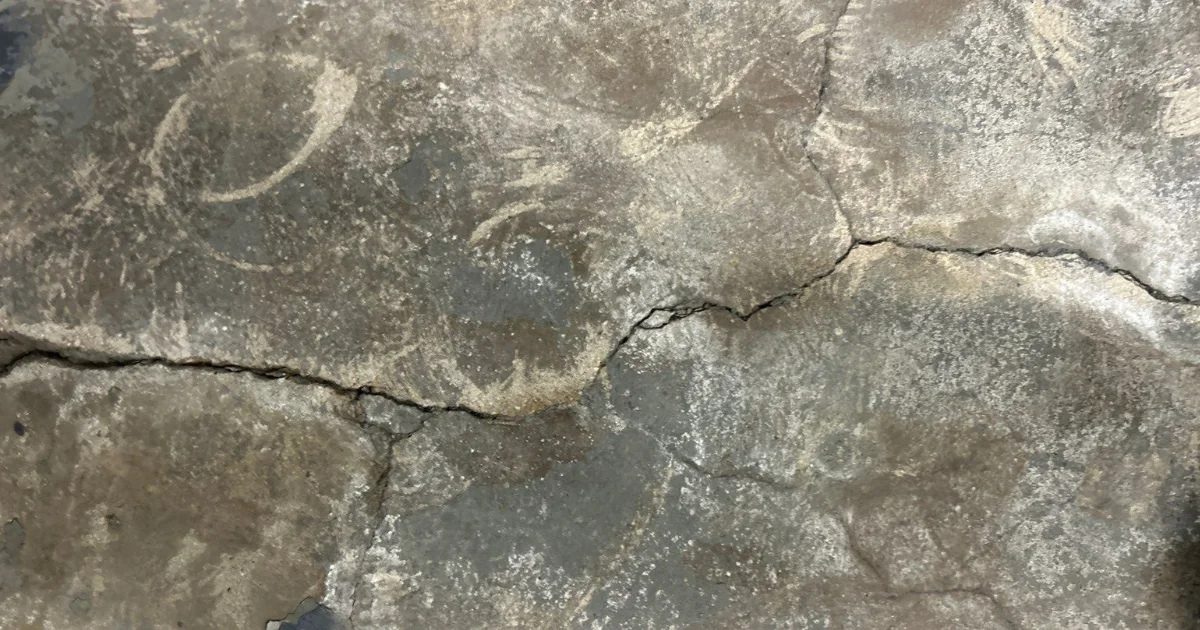
Cracks are usually the first thing homeowners notice. They are also one of the most common conditions addressed during floor preparation.
Hairline cracks, small shrinkage cracks, and similar defects can often be opened as needed, repaired with the appropriate material, and blended into the surrounding floor before the coating system is installed.
Joints require a different approach.
Control joints and expansion joints exist to accommodate movement in the concrete. They should be evaluated as joints, not simply treated like cosmetic cracks and rigidly covered without considering future movement. The right treatment depends on the slab, the type of joint, and the coating system being installed.
The bigger concern is a crack showing evidence of vertical displacement—where one side of the concrete sits higher than the other.
That can point to settlement, heaving, or movement below the slab. A coating can improve the surface, but it cannot stabilize soil or correct structural movement underneath the concrete.
In that situation, the underlying concrete problem needs to be addressed first.
2. Spalling, Scaling, and Delamination: How Deep Is the Damage?
These terms all describe concrete deterioration, but they do not mean exactly the same thing.
Scaling is generally shallow flaking or peeling at the surface.
Spalling occurs when pieces of concrete break away, leaving pits or deeper depressions.
Delamination happens when a layer of concrete separates from the material underneath it. The top may still look reasonably intact even though it is no longer securely bonded.
That hidden damage is why visual inspection is only part of the evaluation.
One way professionals identify questionable areas is by sounding the floor. Solid concrete and delaminated concrete respond differently when tapped. On larger surfaces, chain dragging may also help reveal hollow areas.
Unsound material needs to be removed before coating. Otherwise, the coating may remain attached to the weak concrete while the weak concrete itself separates.
Shallow deterioration over otherwise sound concrete can often be repaired successfully.
Deep spalling, widespread deterioration, exposed or corroding reinforcing steel, or major section loss is another matter. Those conditions may require concrete repair beyond the scope of a coating project—and in severe cases, replacement may make more sense.
In New York and Connecticut, exterior slabs and garage floors also have to deal with freeze-thaw cycles and de-icing salts. Salt carried into a garage on vehicles can contribute to long-term concrete deterioration, especially where the surface is already damaged.
3. Pitting and Pop-Outs: Often More Cosmetic Than Structural
A floor covered in small pits can look much worse than it actually is.
Pitting, small pop-outs, and minor surface voids are common on older garage and basement floors. If the concrete surrounding them is still sound, these defects can frequently be repaired during preparation.
Repair material fills the damaged areas, and the surface is prepared to create a consistent base for the coating system.
The finish you choose can also influence how noticeable minor surface variation is after installation. Decorative flake systems tend to disguise subtle irregularities better than a smooth, single-color finish.
The important distinction is between surface imperfections and weak concrete.
A pitted floor is not necessarily a failing floor.
4. Moisture: The Condition That Requires Testing, Not Guessing
Moisture deserves special attention because you cannot reliably judge the moisture condition of a slab just by looking at it.
Concrete is porous. Moisture can move through a slab as vapor, particularly when the concrete is on grade or below grade. If the amount of moisture exceeds what a particular coating system can tolerate, adhesion and long-term performance may be affected.
That is why professional decisions should be based on testing and the requirements of the coating manufacturer.
Two recognized methods include ASTM F1869, which measures moisture vapor emission at the concrete surface using anhydrous calcium chloride, and ASTM F2170, which measures relative humidity inside the slab using in-situ probes.
There is no single universal moisture limit for every floor coating. The acceptable reading depends on the coating system, primer, slab, and manufacturer’s specifications.
A simpler screening method is the plastic sheet method described in ASTM D4263. A sheet of plastic is sealed against the floor and later checked for indications of moisture.
That can help identify an obvious moisture issue, but it should not be treated as proof that a slab is dry enough for every coating system.
Basement Floors Need Extra Attention
Basements deserve a separate conversation because below-grade concrete is constantly interacting with the surrounding soil.
A basement floor with normal moisture vapor may still be a candidate for the right coating system.
A basement with active water intrusion, chronic flooding, failing drainage, or significant hydrostatic pressure has a different problem. A decorative floor coating should not be presented as a substitute for correcting the source of active water intrusion.
Drainage and water-management issues come first.
Then the floor can be evaluated for coating.
5. Efflorescence: A White Deposit That Tells You Something
Efflorescence is the white, chalky or powdery material that sometimes appears on concrete.
It forms when moisture moves through the concrete, carries soluble salts to the surface, and then evaporates.
The powder itself is a bonding problem because a coating needs to attach to solid concrete—not loose deposits.
But efflorescence is also useful evidence.
If it repeatedly returns after cleaning, moisture is continuing to move through the slab. Simply cleaning the white material away does not explain or correct that movement.
That is why recurring efflorescence should lead to another question:
Where is the moisture coming from?
In a basement, that may mean evaluating drainage and water intrusion. On other slabs, moisture testing can help determine whether the condition is compatible with the planned coating system.
6. An Existing Sealer or Coating: New Material Needs Concrete to Grab
One of the easiest problems to miss is an old sealer.
A previous homeowner or builder may have sealed the garage, patio, or basement floor years ago. The floor may not look glossy anymore, but enough material can remain to interfere with the bond of a new coating.
A quick absorption test can provide a clue.
In its concrete coating guidance, Sherwin-Williams describes placing a small bead of water on the surface. If the concrete quickly absorbs the water, the surface is open. If the water remains beaded instead of soaking in, a sealer or other treatment may be present.
That is a screening test, not the entire evaluation, but it can reveal why preparation is necessary.
An old failing floor coating also cannot simply be hidden under another one.
Loose or incompatible material has to be removed. Mechanical preparation such as diamond grinding or shot blasting allows the installer to remove old material and expose a suitable concrete surface for the new system.
7. Oil and Grease: The Stain May Go Deeper Than the Surface
Garage floors have another challenge: petroleum contamination.
After years of parked cars, lawn equipment, motorcycles, or workshop use, oil may have soaked into the concrete rather than simply sitting on top of it.
That matters because coatings do not bond well to oily or greasy contamination.
Cleaning and degreasing are therefore part of the evaluation and preparation process. The goal is not merely to make the stain lighter. The surface needs to be clean enough for the specified system to develop a dependable bond.
Some contamination is shallow and manageable.
Heavy, long-term saturation can be much more difficult. If petroleum has penetrated deeply into the slab, additional remediation or concrete removal may be necessary in the affected area.
This is another reason a floor can look clean from standing height and still require substantial preparation.
8. New Concrete: Twenty-Eight Days Is a Starting Point, Not a Guarantee
Fresh concrete may look hard within a day or two, but that does not mean it is immediately ready for a non-permeable floor coating.
Concrete contains significant moisture when it is placed, and some of that moisture has to leave the slab as it cures.
A 28-day cure period is a common industry benchmark before many resinous flooring systems are installed. But the calendar alone does not tell you exactly how much moisture remains.
Slab thickness, temperature, humidity, ventilation, mix design, and site conditions can all affect drying.
That is why moisture testing remains important even after the 28-day mark.
A slab can be more than a month old and still carry too much moisture for a particular coating system. The manufacturer’s requirements—not the calendar by itself—should decide when the floor is ready.
Surface Preparation Is Where Coating Performance Begins
Once repairable defects have been addressed, the floor still needs the correct surface profile.
A smooth, dense concrete surface does not automatically provide the texture a coating needs for good mechanical adhesion.
Professional installers typically create that profile with equipment such as diamond grinders or shot blasters. Mechanical preparation can remove weak surface material, old coatings, some contaminants, and laitance while creating a controlled texture for the new coating.
The International Concrete Repair Institute uses its Concrete Surface Profile, or CSP, system to describe different levels of concrete surface texture. The coating manufacturer then specifies the type of preparation or profile appropriate for the system being installed.
This is one reason surface preparation should be matched to the product rather than treated as a generic cleaning step.
What About Acid Etching?
Acid etching appears in many DIY floor-coating instructions, and some products may allow it under specific conditions.
It is not a substitute for every type of mechanical preparation.
Etching does not remove an existing coating, buried oil contamination, loose concrete, or many sealers. Mechanical preparation gives the installer much greater control over what is removed and what surface is left behind.
For a professionally installed resinous floor, the coating manufacturer’s preparation requirements should govern the method.
Garages, Basements, and Patios Put Different Demands on Concrete
The same checklist applies to every slab, but different spaces emphasize different problems.
Garage Floors
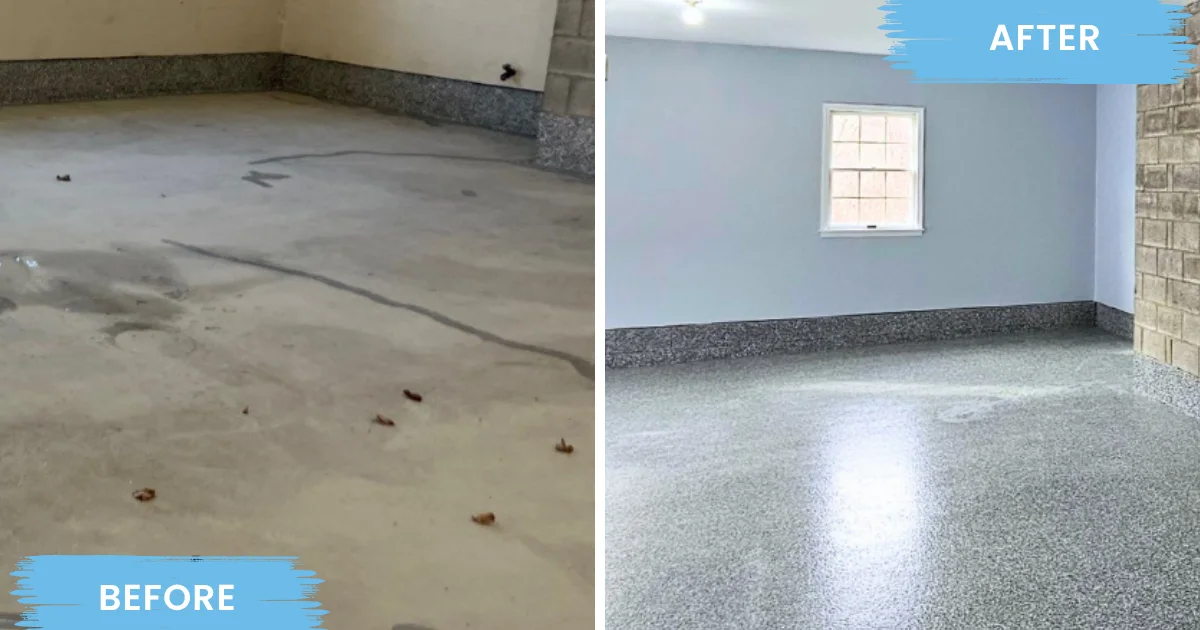
Garage floors see vehicle traffic, hot tires, road salt, oil, abrasion, and winter slush.
That combination makes adhesion and surface preparation especially important. A coating system also needs to be selected for the traffic and exposure the garage will actually receive.
Salt damage and old oil contamination often become part of the preparation scope on older Northeast garages.
Basement Floors
For basements, moisture comes first.
Before discussing color or decorative flakes, the floor should be evaluated for moisture, recurring efflorescence, active water intrusion, drainage problems, previous coatings, cracks, and overall concrete condition.
A coating can create a cleaner, easier-to-maintain finished surface. It should not be sold as the cure for a basement flooding problem.
Patios, Porches, and Other Exterior Concrete
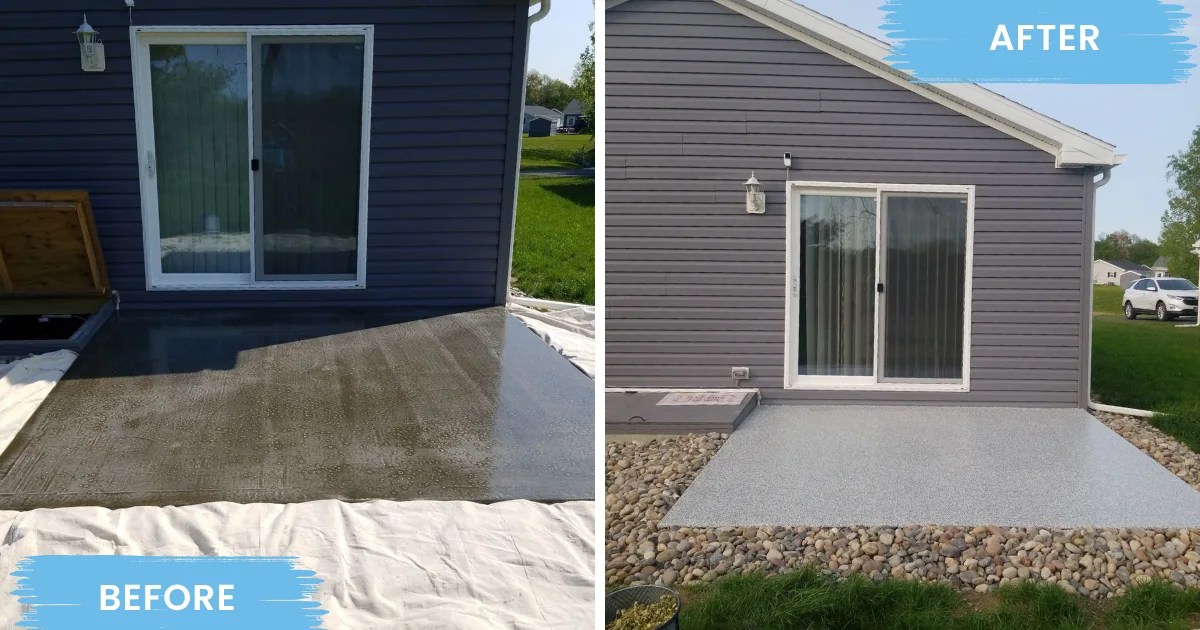
Exterior concrete adds sunlight and weather exposure to the equation.
A coating system intended for outdoor use needs components designed to handle UV exposure. The finished surface also has to account for wet conditions and traction.
A.G. Williams Painting Company’s current residential floor coating services include garages, basements, patios, porches, and other appropriate concrete surfaces, with the system selected around the condition and use of the floor.
What Happens During a Floor Coating Walkthrough?
A good walkthrough should answer a more important question than “What color do you want?”
It should determine what the slab needs.
A.G. Williams Painting Company evaluates floor condition, cracks, pitting, existing coatings, moisture concerns, access, and intended use before the coating system is finalized.
That evaluation leads to a written proposal outlining the scope, coating system, schedule, and homeowner responsibilities before installation begins.
Once the project moves forward, the preparation may include mechanical grinding or shot blasting along with repairs to appropriate cracks and pits before the coating system is applied.
And if the concrete is too deteriorated for a coating to perform reliably, that should be part of the conversation too.
A.G. Williams Painting Company has been family owned since 1906 and serves homeowners throughout Westchester, Rockland, Putnam, Dutchess, and Bronx counties in New York, as well as Fairfield County, Connecticut.
Frequently Asked Questions About Coating Damaged Concrete
Can You Put a Coating Over Cracked Concrete?
Often, yes.
Many hairline cracks and other stable defects can be repaired as part of the preparation process. Movement joints need to be treated appropriately, and cracks showing vertical displacement may indicate settlement or movement that should be addressed before coating.
Can You Coat Spalling or Flaking Concrete?
Sometimes, but the loose material has to be removed first.
Shallow deterioration over otherwise sound concrete can often be repaired. Deep, widespread spalling or damage involving reinforcing steel may require more extensive concrete repair before a floor coating should be considered.
How Do I Know if My Concrete Was Previously Sealed?
Try a simple water absorption check.
If a small amount of water quickly absorbs and darkens the concrete, the surface is relatively open. If it beads instead, a sealer, coating, curing compound, or other treatment may be present.
A professional evaluation can determine what preparation is needed before recoating.
Can a Damp Basement Floor Be Coated?
Possibly.
The important question is why it is damp and how much moisture is moving through the slab.
Normal vapor conditions may be manageable with the appropriate coating system. Active leaks, flooding, or significant water pressure should be corrected before a decorative coating is installed.
Does Oil Have to Be Removed Before a Garage Floor Is Coated?
Yes.
Oil and grease interfere with adhesion. Contaminated areas need to be cleaned and prepared until the surface is suitable for the coating system.
Deep petroleum saturation may require more extensive remediation.
How Long Should New Concrete Cure Before Coating?
Twenty-eight days is a common starting point, but age alone does not prove that the slab is ready.
Moisture testing and the coating manufacturer’s requirements provide a better answer than simply counting days.
Is Your Damaged Concrete a Good Candidate for Coating?
Cracks, stains, pits, and surface wear do not automatically mean you need a new slab.
What matters is what those defects tell us about the concrete underneath.
If the slab is sound, stable, properly prepared, and within the moisture limits of the selected coating system, many less-than-perfect floors can be repaired and transformed into clean, durable finished surfaces.
The key is finding out what the floor needs before covering it.
If you have a garage, basement, patio, or porch with cracked, stained, pitted, or aging concrete, schedule a floor coating walkthrough with A.G. Williams Painting Company. We will evaluate the condition of the slab, explain the preparation and repairs the project requires, and put the proposed scope in writing before installation begins.