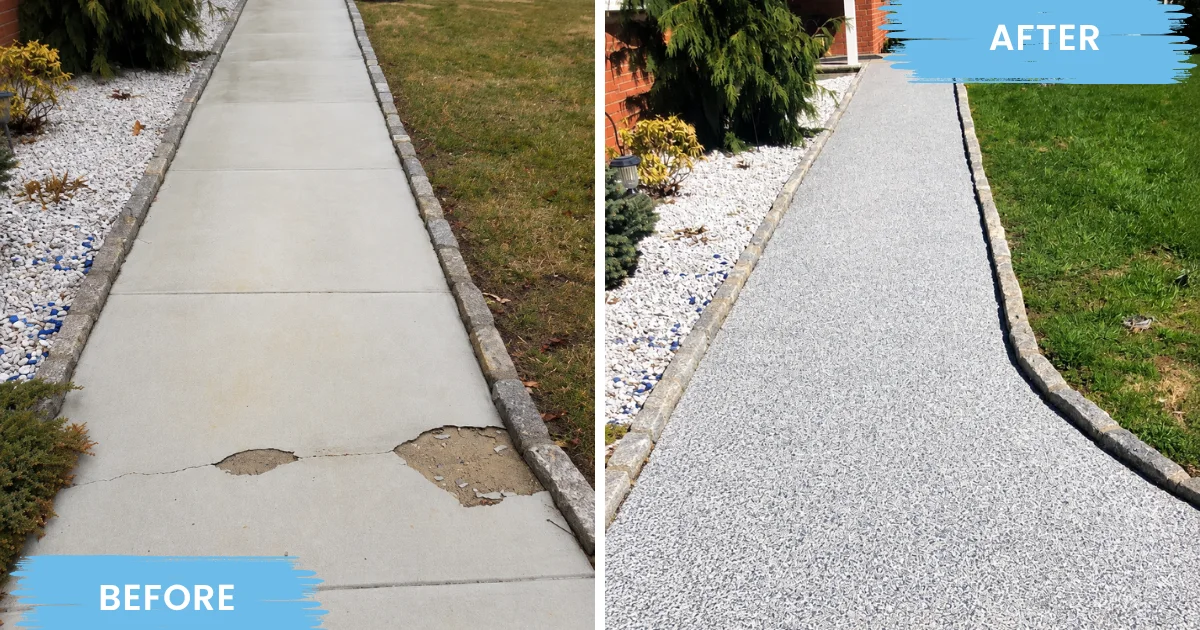
A flood-prone basement floor can often be coated successfully. The key word is successfully.
A professional floor coating can give you a durable, attractive surface that is much easier to clean after minor water intrusion than bare, porous concrete. But a coating cannot stop groundwater, repair a foundation, or solve a drainage problem. And if a coating is installed while the concrete is carrying too much moisture, even a premium system can blister, peel, or lose adhesion.
For homeowners in Westchester County, that distinction matters. Basements are below grade, which means drainage, groundwater, roof runoff, sump systems, cracks, and moisture moving through the concrete can all affect whether a floor is ready to be coated.
At A.G. Williams Painting Company, we install residential concrete floor coatings throughout Westchester, Bronx, Dutchess, Putnam, and Rockland counties in New York and Fairfield County in Connecticut. When a homeowner tells us a basement has taken water before, the first question is not, “Which coating color do you want?” It is, “Where did the water come from, and what condition is the slab in now?”
Here is how to determine whether coating a flood-prone basement floor makes sense.
Can You Coat a Flood-Prone Basement Floor?
Yes, but the basement needs to meet two basic conditions before a film-forming floor coating is installed.
First, the source of liquid water needs to be controlled as much as reasonably possible. Second, the concrete needs to be dry enough for the specific coating system being used.
A floor coating is a finish. It is not basement waterproofing.
That means an epoxy, polyurea, or polyaspartic coating should not be expected to stop water entering through foundation cracks, the wall-to-floor joint, or a slab exposed to groundwater pressure.
If those conditions are addressed and the concrete falls within the coating manufacturer's moisture limits, a properly prepared system can provide an attractive and easy-to-clean floor.
If they are ignored, the coating may fail no matter how good the product is.
Why Moisture Causes Basement Floor Coatings to Fail
Concrete may look completely solid, but it contains a network of microscopic pores. Moisture can move through those pores from the soil beneath the house toward the exposed surface.
Two terms commonly come up when discussing a flood-prone basement floor: moisture vapor transmission and hydrostatic pressure.
Moisture vapor transmission is the movement of water vapor through the slab. It may occur even when the floor does not look wet.
Hydrostatic pressure involves liquid water exerting pressure against or beneath the foundation. It can become particularly noticeable after heavy rain, periods of saturated soil, or a high water table.
Sika explains how moisture and hydrostatic pressure can affect flooring systems, including the potential for a coating or floor covering to lose its bond.
Older basement slabs may also lack an effective vapor retarder beneath the concrete. Without that barrier, moisture in the soil has an easier path into the slab.
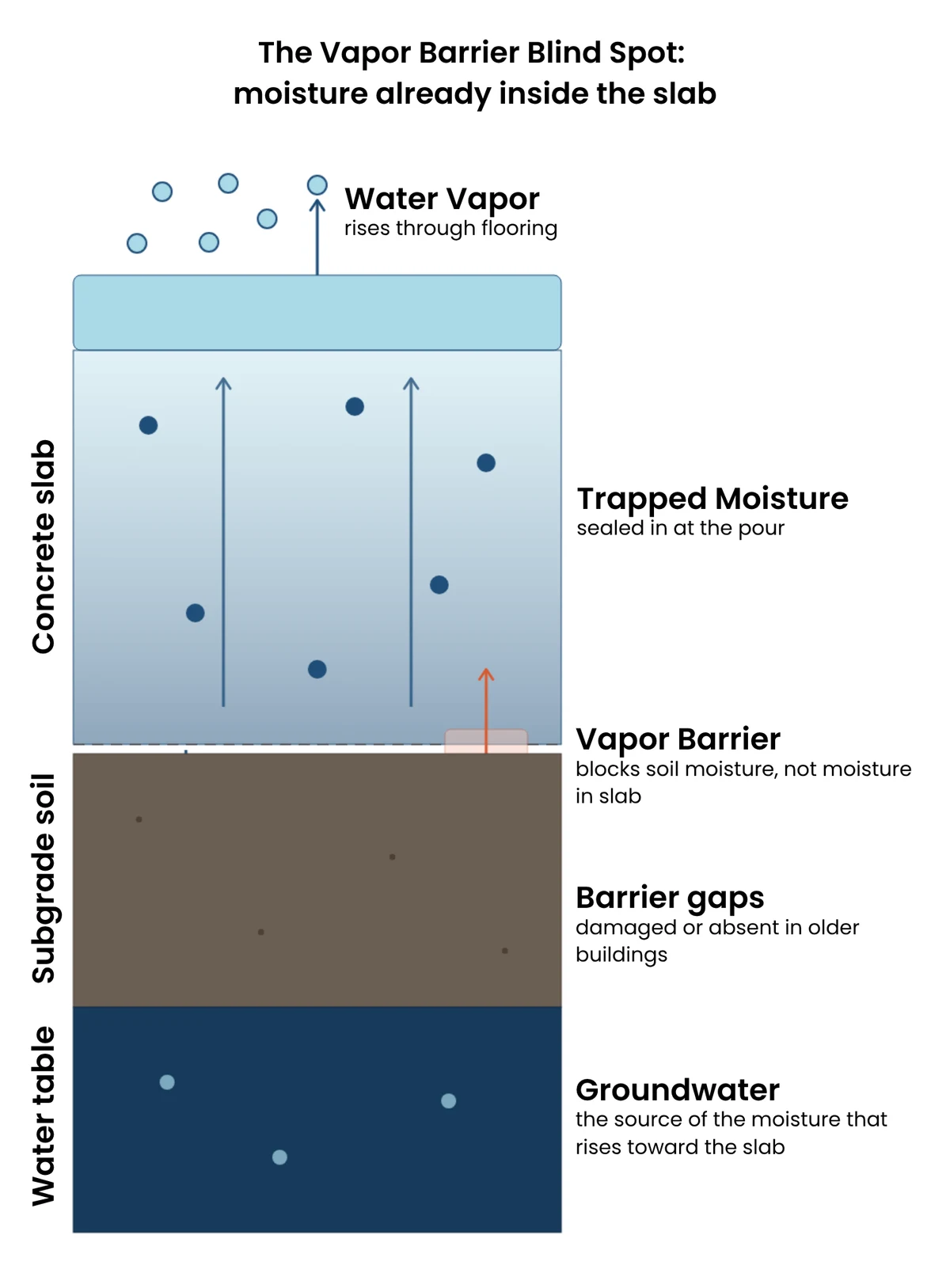
That matters because epoxy, polyurea, and polyaspartic systems form a film over the concrete. When excessive moisture or vapor is moving upward, pressure can develop at the bond line. The result may be bubbling, blistering, peeling, or sections of coating separating from the floor.
This is why the correct question is not simply, “Does the basement flood?”
It is: What is causing the water, and how much moisture is moving through the slab now?
Test a Flood-Prone Basement Floor Before Coating It
You cannot reliably determine whether concrete is ready for a floor coating just by looking at it.
A basement may feel dry and still have significant moisture moving through the slab. Conversely, a basement that experienced a water event months ago may test within acceptable limits after the underlying problem has been corrected.
Testing provides information that appearance cannot.
Two recognized methods frequently used when evaluating concrete moisture are ASTM F1869 and ASTM F2170.
ASTM F1869: Calcium Chloride Testing
ASTM F1869 measures the rate at which moisture vapor is being emitted from the concrete surface.
A measured amount of anhydrous calcium chloride is placed beneath a sealed cover on the slab. After the required testing period, the change in weight is used to calculate the moisture vapor emission rate.
The result is typically reported as pounds of moisture per 1,000 square feet over 24 hours.
For a homeowner, the important point is that this test measures moisture leaving the slab near its surface.
ASTM F2170: In-Slab Relative Humidity Testing
ASTM F2170 approaches the problem differently.
Small holes are drilled into the concrete, and probes measure relative humidity within the slab. Because the measurement is taken below the surface, it can provide useful information about moisture conditions inside the concrete.
This can be particularly valuable when determining how the slab may behave after a relatively impermeable floor system is installed.
What Moisture Level Is Too High?
There is no universal number that makes every concrete floor safe or unsafe to coat.
That decision should be based on the published requirements for the specific primer, coating, or moisture-mitigation system being installed.
Some conventional resinous coatings have historically required conditions around 75 to 80% relative humidity or moisture vapor emission rates around 3 pounds per 1,000 square feet per 24 hours. Other products are formulated and tested for substantially higher moisture levels.
That is why a contractor should not rely on a generic industry rule alone.
The measured result needs to be compared with the manufacturer's current technical data for the complete coating system.
What About the Plastic Sheet Moisture Test?
You may also hear about the plastic sheet test, ASTM D4263.
With this method, a clear plastic sheet is sealed to the concrete and left in place. Condensation or visible darkening beneath the plastic can indicate moisture.
It can be a useful screening tool because it may reveal an obvious moisture problem.
However, it does not tell you exactly how much moisture is moving through the concrete, and conditions at the surface do not necessarily tell you what is happening deeper in the slab.
For that reason, a plastic sheet is better treated as an initial warning than as the sole basis for selecting a high-performance floor coating.
If moisture is a serious concern, quantitative testing provides better information.
Can a Moisture-Mitigation Primer Solve the Problem?
Sometimes—but this is where homeowners need to distinguish between moisture mitigation and waterproofing.
Specialized epoxy moisture-mitigation products are designed to reduce the amount of moisture vapor reaching the flooring or coating above them. Some systems are rated for very high in-slab relative humidity when installed over properly prepared, structurally sound concrete.
That can dramatically expand the range of slabs that can accept a finished floor.
It still does not mean you can ignore water coming into the basement.
A moisture-mitigation primer is not intended to repair active foundation leaks, stop water moving through an open crack, replace a failed sump pump, or eliminate groundwater collecting around the foundation.
If liquid water is actively entering the space, control that problem first.
Epoxy, Polyaspartic, and Other Options for a Damp Basement
Different floor products handle basement conditions differently. Understanding those differences can help you avoid choosing a finish simply because it has an appealing showroom sample.
| Floor System | What It Does | Considerations for a Damp Basement |
|---|---|---|
Epoxy | Creates a hard, seamless film over concrete | Durable, but the slab must meet the system's moisture requirements |
Polyurea/polyaspartic | Creates a durable resinous film and can cure quickly | Excellent performance in the right system, but moisture testing and preparation still matter |
Concrete floor paint | Creates a relatively thin surface film | Generally less durable than a professional resinous system, especially on a moisture-challenged slab |
Penetrating sealer | Penetrates the concrete rather than creating a thick film | Can be useful where maintaining a more breathable surface is a priority |
No coating chemistry gives you permission to skip moisture testing.
Even products promoted for excellent adhesion or flexibility have substrate requirements.
Why Basic Concrete Floor Paint Often Peels
Painting a basement floor with an inexpensive one-component product can be tempting because it looks like a quick weekend improvement.
Unfortunately, a damp below-grade slab is an unforgiving surface.
Sherwin-Williams identifies moisture moving through concrete as one possible cause of peeling floor paint. Contamination, poor surface preparation, and incompatible existing coatings can contribute as well.
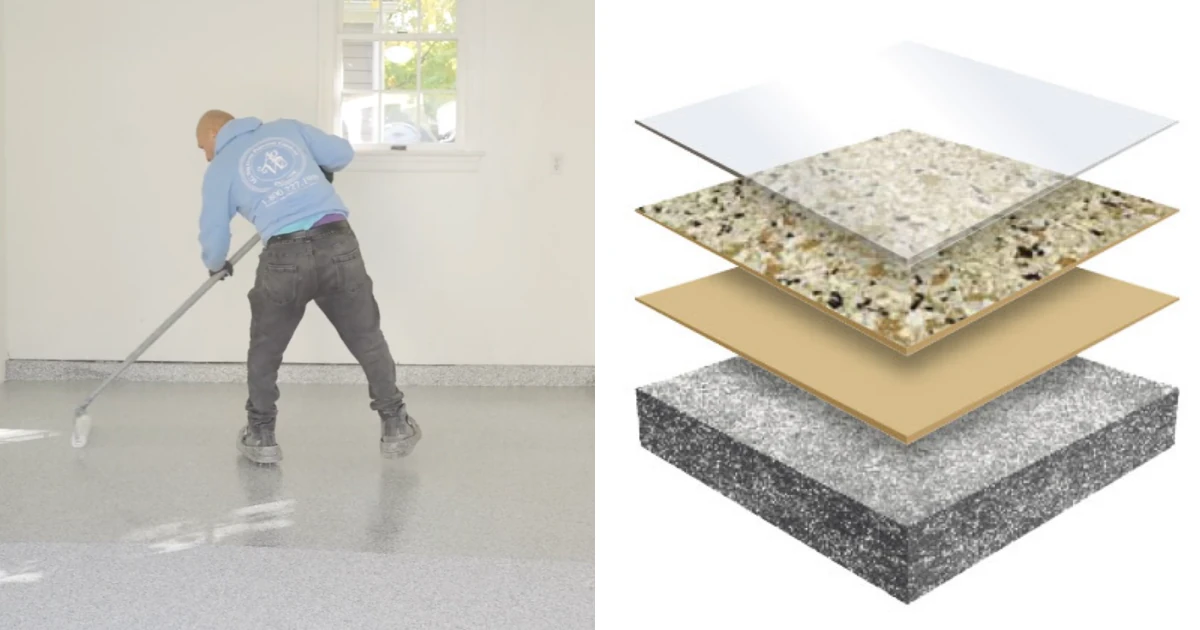
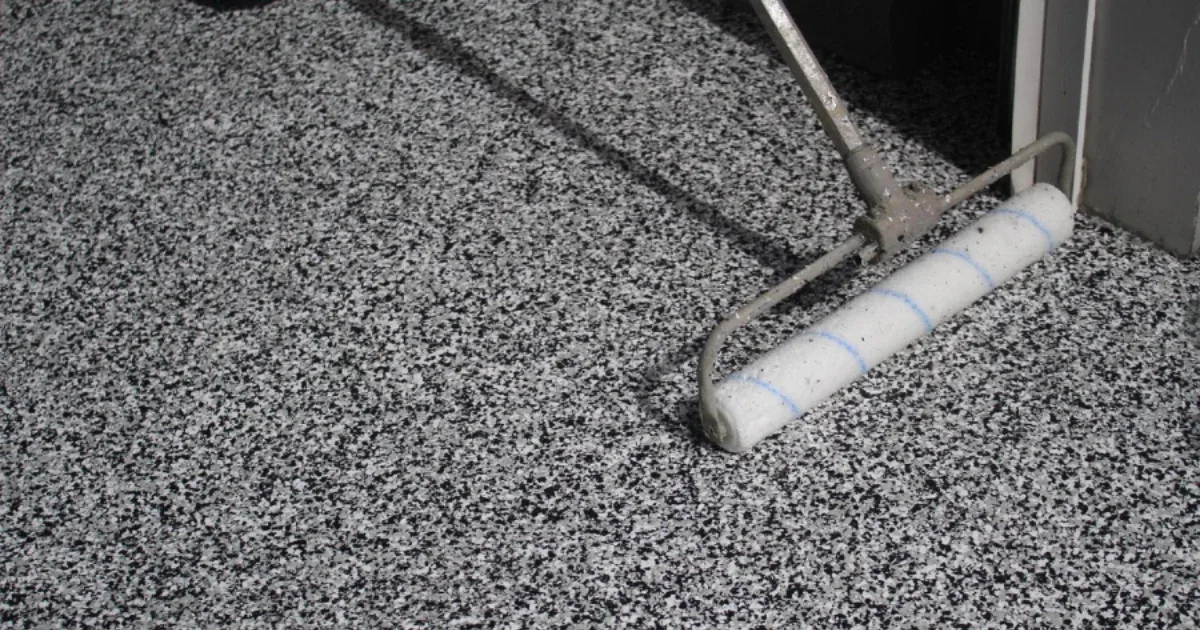
A professional resinous system is not simply “thicker paint.” Surface preparation, repair work, primers, coating chemistry, application thickness, cure conditions, and moisture compatibility all contribute to the finished result.
When a Penetrating Sealer May Make More Sense
Sometimes the best answer is not a decorative film coating at all.
Penetrating treatments work within the pores of the concrete rather than creating the same type of continuous surface film as epoxy or polyaspartic coatings.
Depending on the product, a penetrating treatment may help densify the concrete or reduce water absorption while maintaining more vapor permeability than a film-forming system.
That can make this category worth discussing for a chronically moisture-challenged slab that cannot reliably support the decorative coating a homeowner originally wanted.
There is a tradeoff.
A penetrating treatment will generally leave the floor looking much more like concrete. It will not provide the decorative flake appearance, build, or continuous finished surface associated with a professional resinous floor system.
The right solution depends on the condition of the concrete and how you plan to use the basement.
Surface Preparation Matters Just as Much as the Coating
Even a perfectly dry basement floor can fail when it is poorly prepared.
Professional floor coatings need a sound, clean, properly profiled surface so that the coating can develop a strong mechanical bond with the concrete.
At A.G. Williams Painting Company, floor preparation may involve diamond grinding or shot blasting rather than simply washing the floor and rolling a coating over it.
Mechanical preparation helps remove weak surface material, old coatings, contamination, and other bond breakers while creating the texture required by the coating system.
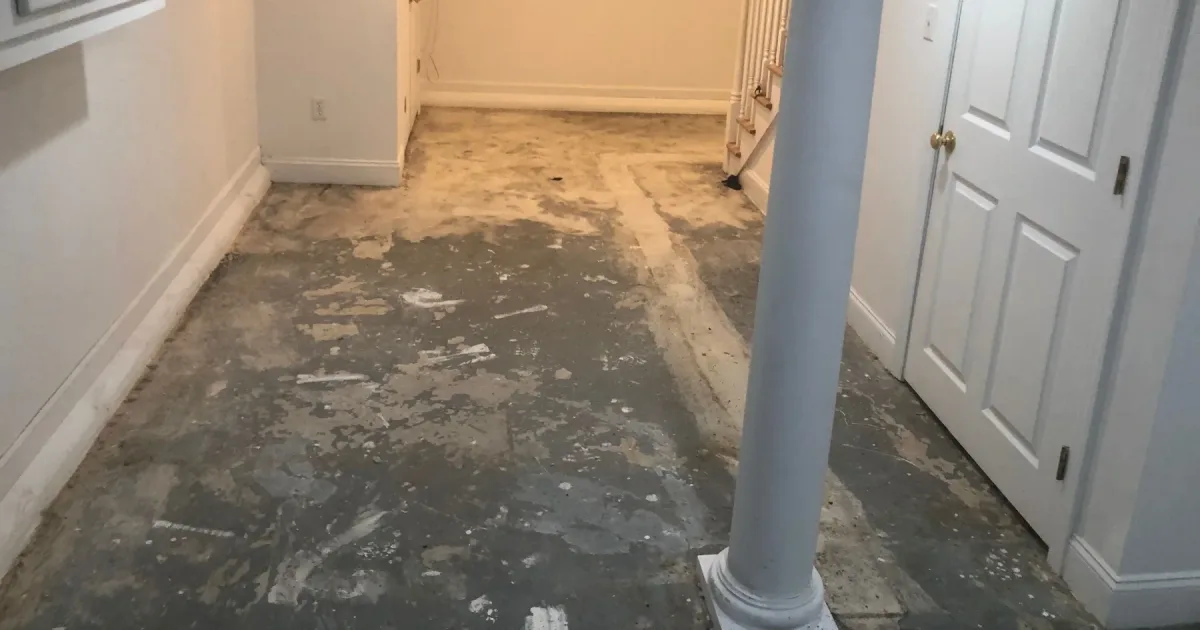
Cracks, pits, and damaged areas also need to be evaluated and repaired appropriately before coating.
This is one of the biggest differences between a professional floor-coating project and a basic DIY floor-painting project: much of the performance is determined before the first finish coat is applied.
You can learn more about preparing for a project in the A.G. Williams Painting Company residential concrete floor coatings checklist.
Control Basement Water Before Choosing a Coating
If your basement has a history of flooding, solving or reducing the source of the water should come before the decorative finish.
Depending on the house, that may mean:
- Correcting grading so surface water moves away from the foundation, maintaining gutters and downspouts, and directing roof runoff away from the house.
- Making sure the sump pump and any backup system are operating properly.
- Addressing water entering through foundation cracks, penetrations, or the wall-to-floor joint.
- Evaluating interior drainage or exterior waterproofing when groundwater is persistently affecting the basement.
- Allowing materials and the concrete slab to dry after a water event before testing and refinishing.
The goal is not to guarantee that the basement will never see another drop of water. The goal is to avoid relying on a decorative floor coating to perform the job of a drainage or waterproofing system.
What Needs to Be Fixed on the Concrete First?
Moisture is only one part of the evaluation.
Efflorescence—the white, powdery or crystalline residue sometimes found on basement concrete—is evidence that moisture has transported dissolved salts to the surface. Those deposits should not simply be coated over.
Existing paint, sealers, curing compounds, adhesives, and failing coatings can also interfere with adhesion and may need to be mechanically removed.
Oil and other contaminants require attention as well.
Cracks deserve their own evaluation. A stable crack may be repairable as part of floor preparation, while an actively moving crack or a crack associated with water intrusion can indicate a different problem that should be addressed before the cosmetic finish.
Floor drains and sump openings also need to remain functional and accessible.
What Should You Do After an Actual Basement Flood?
If your basement has recently flooded, refinishing the floor should not be the first priority.
Cleaning, drying, and dealing with damaged materials come first.
The U.S. Environmental Protection Agency's mold guidance recommends acting quickly when materials get wet and warns against painting over moldy surfaces.
That principle applies to the floor-coating decision too.
Do not choose an arbitrary timeline such as “three days after the flood” or “once the concrete looks dry.”
Drying times vary based on the depth and duration of flooding, temperature, humidity, ventilation, slab construction, groundwater conditions, and other factors.
Once the source of the water has been dealt with and the basement is dry, evaluate and test the slab before deciding whether it is ready for a coating.
What Can a Coated Basement Floor Realistically Do?
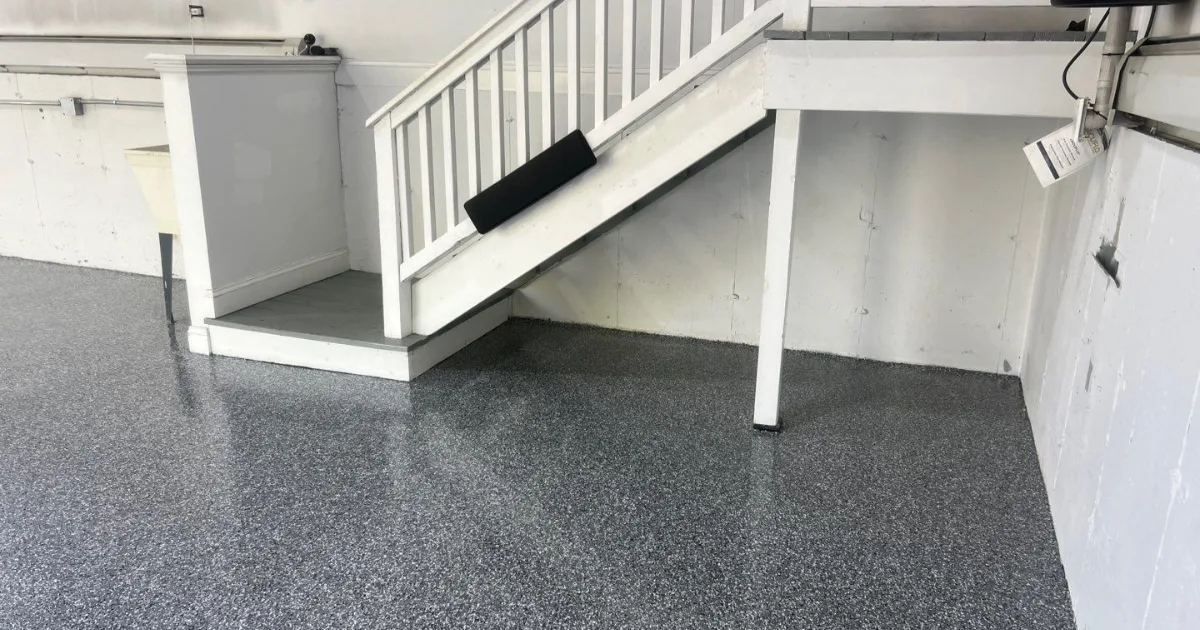
A properly selected and installed floor-coating system can make a basement more functional and easier to maintain.
The seamless surface is easier to sweep and clean than unfinished concrete. It can resist many common stains, reduce concrete dust, improve the appearance of a utility or recreation area, and simplify cleanup if the surface gets wet.
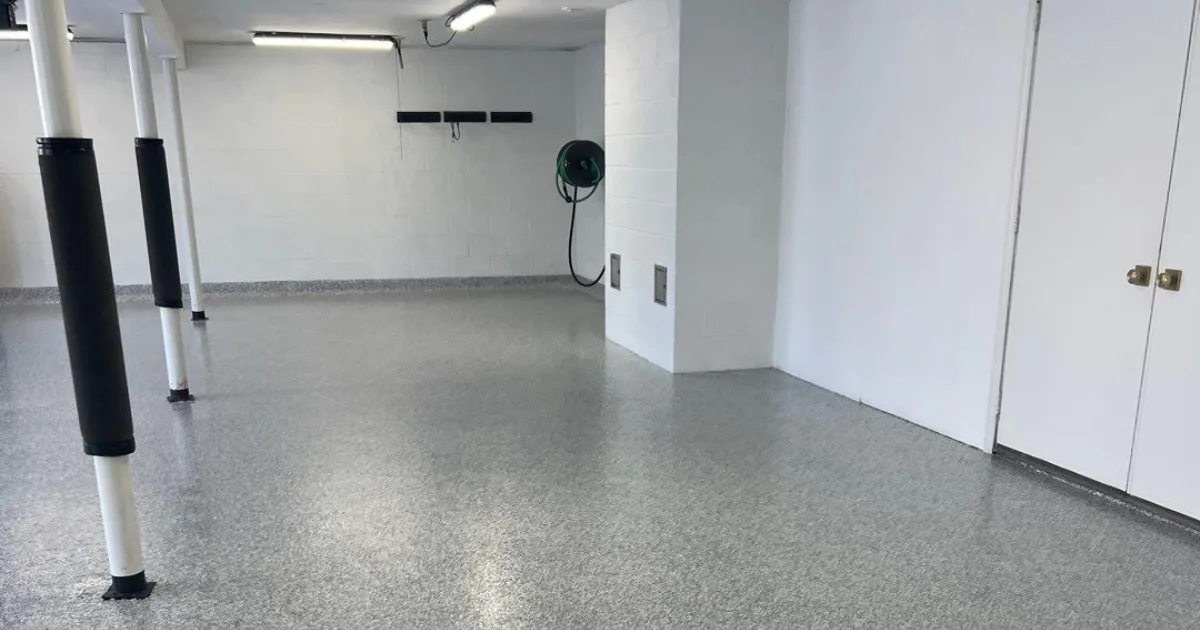
For homeowners with a basement that has experienced occasional water intrusion, that can be a major advantage. Instead of relying on carpet or another moisture-sensitive floor covering, you have a finish bonded directly to the concrete.
What it cannot do is equally important.
A coating cannot prevent another flood. It cannot lower the water table. It cannot repair a failed drainage system or relieve significant hydrostatic pressure.
Think of the coating as the durable finished surface after the water-management decisions have been made.
How A.G. Williams Painting Company Approaches Basement Floors
At A.G. Williams Painting Company, our process begins with the concrete rather than the coating color.
We look at the condition of the floor, signs of previous moisture, cracks, existing finishes, contamination, drainage conditions, and how you want to use the room. Those conditions help determine what should happen next and whether coating the floor makes sense.
If water management or repairs need to come first, that sequencing matters.
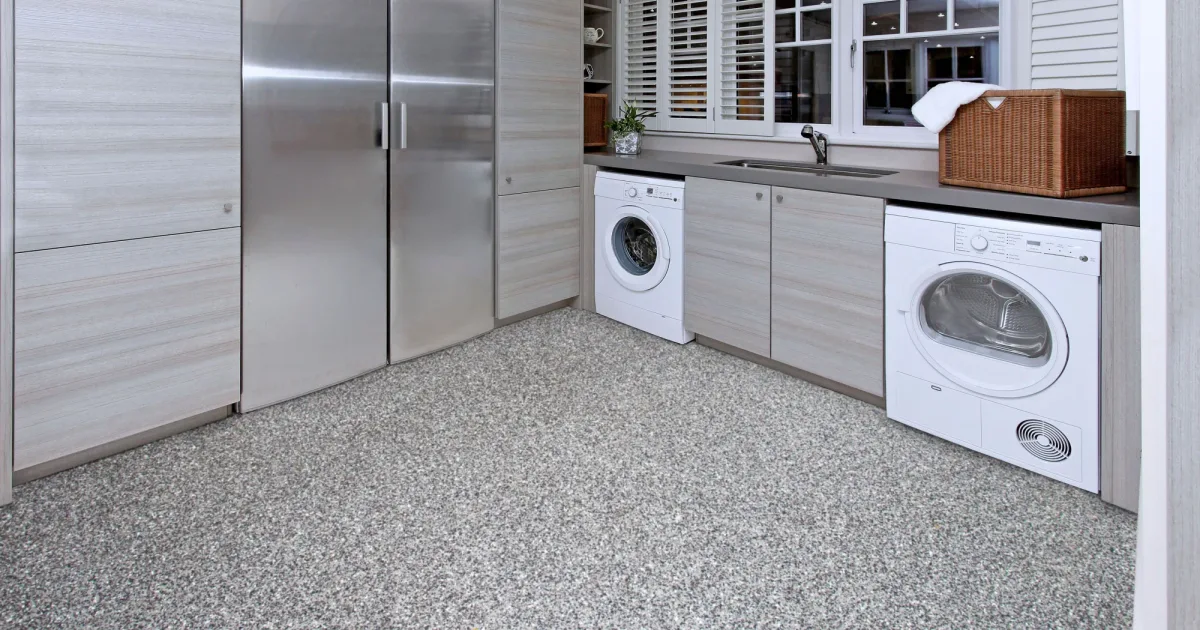
For suitable residential floors, our coating process includes mechanical surface preparation and a multi-coat resinous system designed to provide a durable finished surface. You can learn more about the system on our concrete floor coating page.
Homeowners also receive direct contact information for the appropriate project team so questions can be addressed during the work.
Our goal is not simply to put a coating on every concrete floor. It is to recommend a system that has a reasonable opportunity to perform well given the actual conditions in the home.
Frequently Asked Questions About Flood-Prone Basement Floors
Will epoxy hold up if my basement floods again?
It can, provided the coating was installed over properly prepared concrete that met the system's moisture requirements and the flood does not create conditions beyond what the system can tolerate.
The coating does not stop the water from entering. Its advantage is that a sound coated concrete surface is generally much easier to clean than porous bare concrete or moisture-sensitive flooring.
Do I need to fix my water problem before coating the floor?
Yes. Active water intrusion should be addressed before treating the coating as the finished solution.
Start with the source: grading, gutters, drainage, sump performance, foundation cracks, or groundwater conditions. Once the water issue is controlled, the slab can be evaluated for coating.
How do I know if my concrete floor is too wet?
Test it and compare the results with the requirements published for the coating system you plan to install.
ASTM F1869 measures moisture vapor emission at the surface, while ASTM F2170 measures relative humidity within the slab.
Avoid relying on a generic pass/fail number because allowable moisture levels differ between products and systems.
Can I use garage floor paint in my basement?
You can apply products labeled for concrete floors when the manufacturer's conditions are met, but a simple floor paint is not equivalent to a professionally prepared resinous coating system.
On a damp below-grade slab, moisture and inadequate preparation can cause a thin painted finish to peel prematurely.
Can you coat over efflorescence?
Not without addressing it first.
Efflorescence is a sign that moisture has been moving through the masonry or concrete. The deposits need to be removed, and the moisture source should be investigated before a new coating is installed.
Is a penetrating sealer better for a damp basement?
In some situations, yes.
If ongoing vapor transmission makes a film-forming decorative coating unsuitable, a more vapor-permeable penetrating treatment may be the better fit. The downside is that it will not produce the same decorative appearance or seamless build as epoxy or polyaspartic flooring.
Thinking About Coating a Flood-Prone Basement Floor in Westchester?
A history of water in the basement does not automatically rule out a floor coating.
It does mean the project deserves more than a quick coat of garage floor paint.
The right sequence is to identify and manage the source of the water, evaluate the existing concrete, test moisture when needed, mechanically prepare the slab, and then choose a coating system whose requirements match the conditions.
If you are considering a flood-prone basement floor coating in Westchester County or another area served by A.G. Williams Painting Company, schedule a floor-coating consultation with A.G. Williams Painting Company.
We can review the condition of the concrete, discuss the basement's moisture history, and help you determine what should happen before a coating goes down.