Accent wall painting can completely change how a room feels without requiring a full-room color change. But the best accent walls do not begin with a dramatic paint chip. They begin with the room itself.
A successful feature wall looks like the room was designed around it. A disappointing one often happens in reverse: the homeowner falls in love with a color first and then starts looking for somewhere to put it.
That is why choosing the right wall matters just as much as choosing the right paint.
Benjamin Moore recommends selecting an accent wall with purpose because the eye will naturally be drawn toward it. In other words, use paint to reinforce a focal point that already makes sense rather than trying to force attention onto an awkward part of the room. The company also suggests considering the room’s existing colors and natural light before settling on an accent color.
Whether you are refreshing a bedroom in Westchester County, updating a family room in Fairfield County, or adding more personality to a New York or Connecticut home, these five rules can help you make an accent wall look intentional rather than added as an afterthought.
Rule 1: Let the Room Choose the Accent Wall
Before opening a paint fan deck, stand at the entrance to the room and notice where your eye goes first.
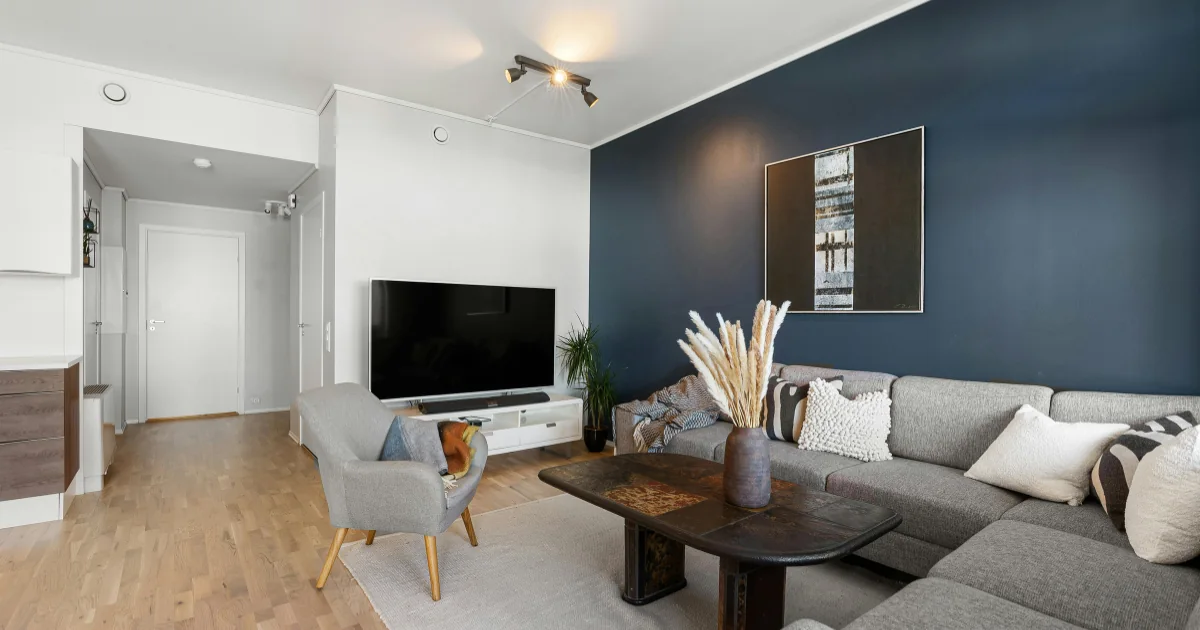
Every room tends to have a natural focal point. It may be the fireplace wall, the wall behind the bed, a set of built-in shelves, an architectural feature, or simply the broad wall that is most visible when you enter.
That wall is usually the strongest candidate for accent wall painting.
| Strong accent wall candidates | Walls to reconsider |
|---|---|
| Fireplace or built-in wall | Wall heavily interrupted by doors and windows |
| Wall behind a bed or major furniture grouping | Wall hidden behind the primary seating position |
| First major wall visible from the doorway | Wall competing with an established focal point |
| Broad, uninterrupted wall | Wall with no clean architectural stopping point |
| Wall that visually defines part of an open floor plan | Small fragmented surfaces that make the color feel accidental |
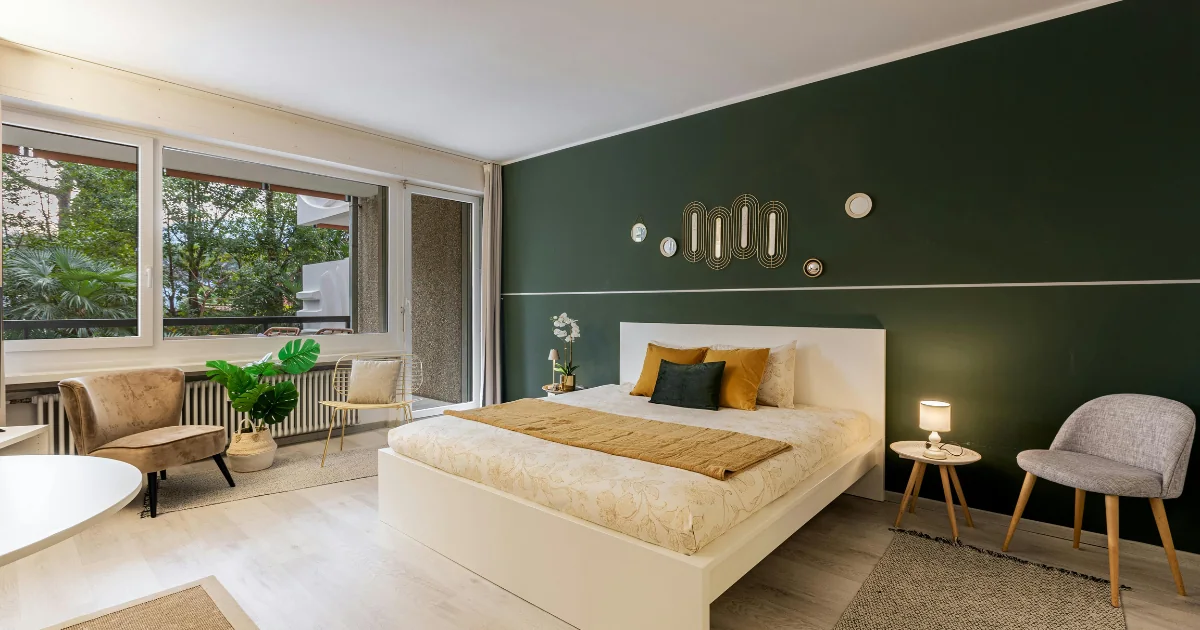
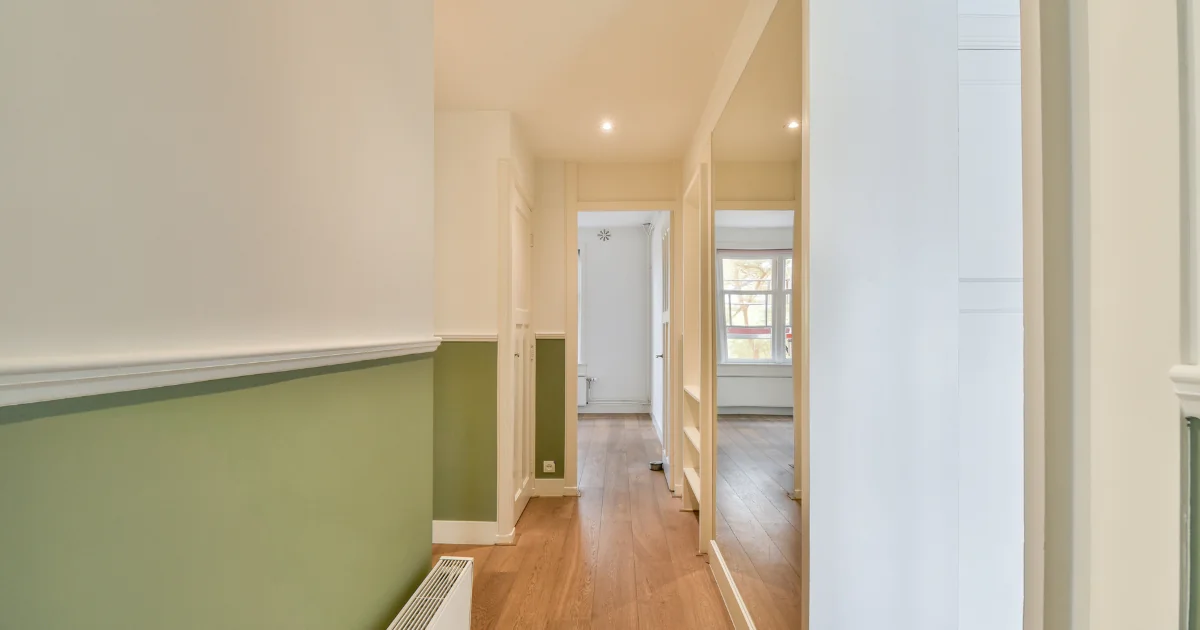
Where the accent color ends matters too. Inside corners, trim, built-ins, paneling, and other clear architectural breaks usually create the cleanest transition between colors.
Avoid stopping a color change arbitrarily in the middle of a continuous surface. The goal is for the accent wall to look architectural, even when the architecture itself has not changed.
Rule 2: Decide What the Accent Wall Needs to Do
A good accent wall has a job.
Before you choose the color, ask what you want the wall to accomplish. In most rooms, accent wall painting works best when it serves one of three purposes.
The first is reinforcing a focal point. A fireplace, headboard, artwork, shelving, or entertainment area already attracts attention. The accent color gives that feature a visual frame.
The second is creating definition. Open-concept spaces sometimes need visual boundaries that the floor plan does not provide. Benjamin Moore specifically identifies breaking up open floor plans and high-ceiling rooms as useful applications for accent color.
The third is changing how the proportions of the room feel. Warm, saturated colors tend to feel more visually present, while cooler or lighter colors can feel more open. A.G. Williams Painting Company has previously discussed how warmer colors can visually “advance,” helping a large space feel more intimate.
This is especially helpful in long rooms. Painting the far wall a deeper color can visually bring that end of the room forward and make the proportions feel more balanced.
If the wall is not emphasizing, defining, or improving anything, consider whether the room might simply look better with one well-chosen color on every wall.
An accent wall does not have to exist just because there are four walls available.
Rule 3: Choose the Color in the Context of the Whole Room
One of the easiest accent wall painting mistakes is evaluating a color by itself.
No color lives by itself once it is on the wall. It sits next to your other walls, trim, flooring, furniture, artwork, cabinetry, curtains, and adjoining rooms.
Start with those elements.
A color pulled from a rug, artwork, fireplace stone, upholstery, tile, or another permanent finish often feels more natural than a completely unrelated color chosen from a display at the paint store.
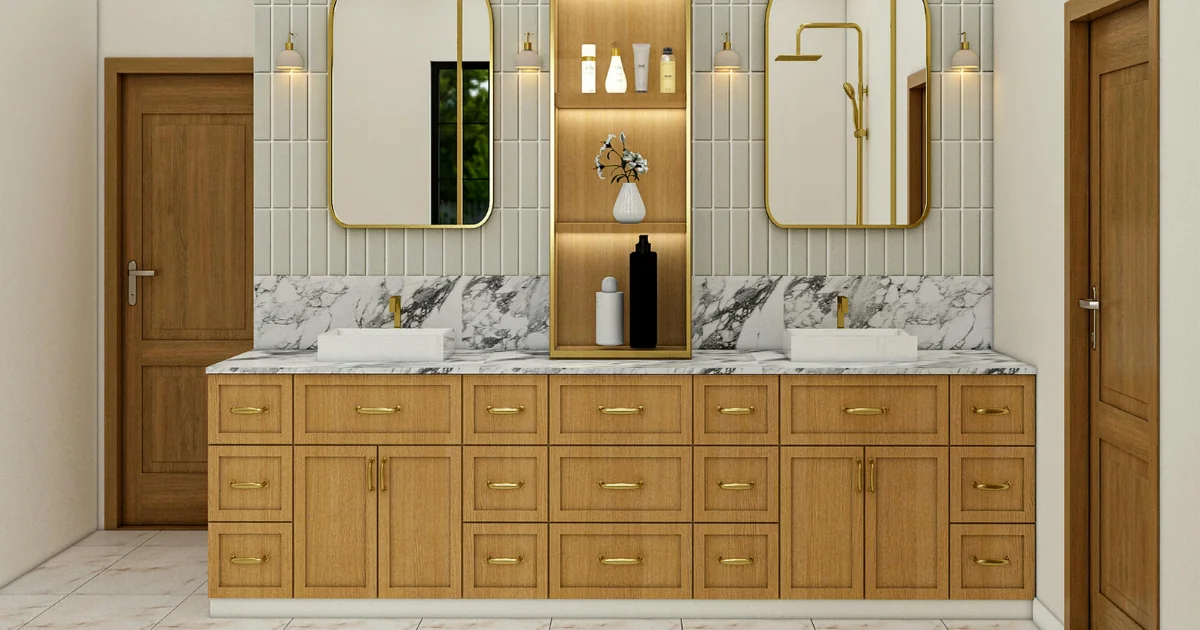
Benjamin Moore recommends looking to artwork and textiles for accent-wall inspiration and suggests using a lighter accent when the surrounding walls are dark or a deeper, bolder color when the surrounding walls are light.
You do not necessarily need a dramatic contrast. Sometimes moving several steps lighter or darker within the same color family is enough to create definition without making the wall dominate the room.
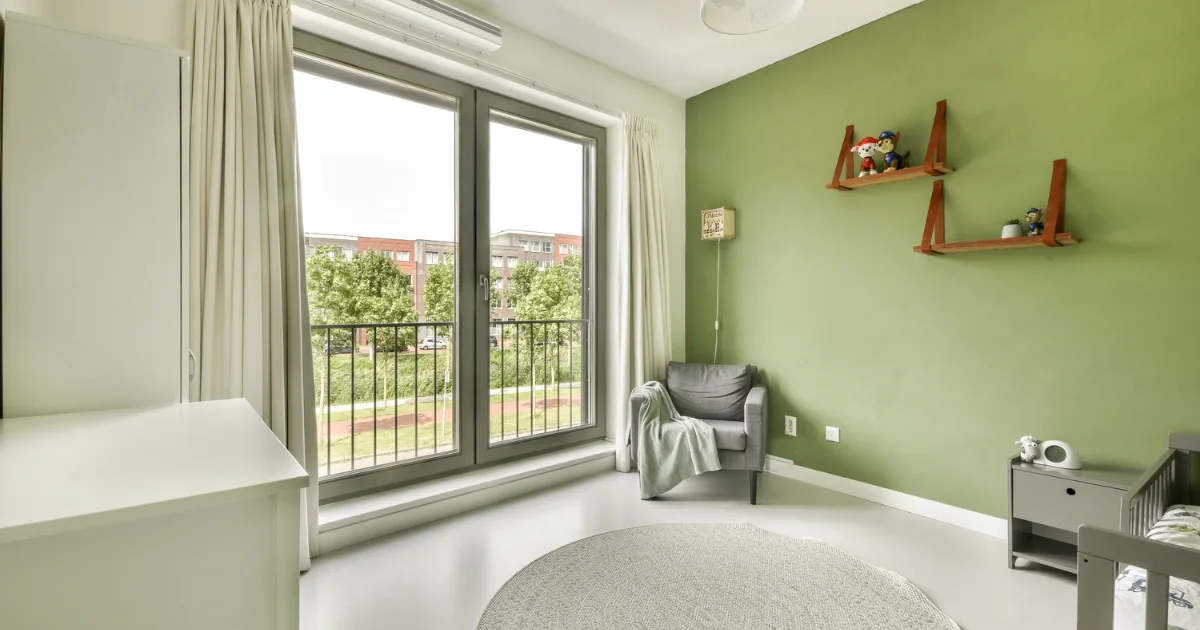
For homeowners who want to go bolder, A.G. Williams Painting Company offers additional ideas for incorporating deeper colors through accent walls, built-ins, ceilings, and trim. Explore our interior painting ideas for bold colors.
Always Test the Color in the Actual Room
Natural and artificial light can substantially change how paint looks.
A north-facing room will treat a color differently than a bright south-facing room. The same paint can also look noticeably different at 8 a.m. and 8 p.m.
Benjamin Moore recommends accounting for both the direction a room faces and the natural light it receives when selecting an accent-wall color.
Test a generous sample on or immediately beside the wall you intend to paint. Look at it in the morning, afternoon, and evening. Turn on the lamps and overhead lights you normally use after dark.
Do not make the final decision based solely on a small paint chip under store lighting.
And whenever possible, settle the final color before the painting begins. Deep and vivid colors may affect the primer recommendation and number of coats needed for consistent coverage.
Rule 4: Choose the Right Paint Sheen
Color gets most of the attention, but sheen has a major influence on how an accent wall looks.
Sherwin-Williams explains that sheen refers to the amount of shine or light reflection in a finish and affects both appearance and performance. The company recommends considering room use, surface imperfections, cleaning needs, and durability when choosing a finish.
For most painted accent walls, matching the sheen used on the other walls is the safest starting point.
| Finish | How it tends to look | Common considerations |
|---|---|---|
| Flat or matte | Soft, low-reflection appearance | Helps minimize imperfections but may be less suited to frequent cleaning |
| Eggshell or satin | Subtle reflection | Practical for many living spaces, family rooms, halls, and bedrooms |
| Semi-gloss | Noticeably reflective | More often associated with trim, doors, kitchens, baths, and other surfaces needing durability |
Sherwin-Williams also notes that glossy finishes call attention to a surface, including small flaws, while lower-sheen finishes are better suited to visually downplaying imperfections.
That matters even more on an accent wall because it is already designed to attract attention.
A dark color combined with a noticeably higher sheen can make patches, roller marks, drywall seams, and other irregularities more visible under side lighting.
Unless you are deliberately using sheen as a design feature, keeping the accent wall consistent with the surrounding walls generally creates the most polished result.
Rule 5: Put More Attention Into Surface Preparation
Accent wall painting does not forgive rushed prep.
When one wall is darker, bolder, or simply different from everything around it, the eye pays more attention to the surface. Nail pops, dents, old repairs, drywall seams, uneven texture, and flashing over patched areas can suddenly become much easier to see.
That is why surface preparation should happen before the dramatic color goes on.
A.G. Williams Painting Company’s interior painting process includes protecting floors and furnishings, repairing cracks, nail pops, and dents, sanding repairs, and priming bare areas before finish paint is applied.
Learn more about A.G. Williams Painting Company’s interior painting services, including the preparation and finish work that help bold colors look their best.
Plan Your Accent Wall With the Whole Room in Mind
An accent wall works best when it strengthens a room’s focal point, fits the surrounding palette and lighting, uses an appropriate sheen, and begins with careful surface preparation. When those decisions work together, the finished wall feels deliberate rather than decorative for its own sake.
For help choosing and preparing the right feature wall, explore A.G. Williams Painting Company’s interior painting services or request a proposal.