Painting before moving in is one of the few home improvements that gets harder the moment daily life enters the house.
Before the furniture arrives, a painting crew can reach every wall, closet, stair hall, baseboard, and doorway. Nothing needs to be moved twice, and no one has to live around drop cloths while the work is underway.
The empty house is the advantage, but it is also a fixed window. The move date will not wait for a delayed flooring delivery, an unresolved color decision, or repairs that were missed during the first walkthrough. Plan the scope, sequence, ventilation, and cure time before the first coat goes on, and the work can be completed while the house is still accessible.
Why paint before moving in?
An occupied home forces an interior project to work around daily life. Furniture has to be moved and covered. Rooms need to remain usable. Work is divided into smaller sections, and some surfaces become difficult to reach once bookcases, appliances, beds, and rugs are in place.
An empty house removes those constraints. Painters can move from room to room in the most efficient order, repair every visible defect, and reach areas that may not be accessible again for years.
Painting before moving in can also spare you the stress of managing the project yourself during an already demanding move. A DIY job involves more than applying paint—you have to plan the sequence, purchase materials, prepare each surface, protect the finished areas, track drying times, and handle unexpected problems. Hiring a professional crew lets you focus on the move while someone else manages the work from preparation through completion.
That does not make the project automatic. An empty home gives you access, not extra time. The move-in date still has to be treated as the deadline everything else works backward from.

Start with the dates
Before selecting colors or scheduling a crew, identify the dates that control the project:
- When will you have legal access to the home?
- When will heat, electricity, and water be available?
- When will flooring, cabinets, appliances, and other trades be finished?
- When can painting begin?
- When will the final walkthrough and touch-ups happen?
- When will the moving truck arrive?
Do not plan for the final coat to be applied on moving day. Paint may be dry to the touch while it is still curing, and the house may still need ventilation and a final inspection.
Leave room for repairs that become visible once the house is empty, material delays, and small touch-ups discovered during closeout. A realistic schedule protects the finish and makes moving day less chaotic.

Define the scope while the house is empty
“Interior painting” can mean walls only, or it can include nearly every visible surface in the home. Settle the scope before work begins.
Decide whether the project includes:
- Walls
- Ceilings
- Baseboards, crown molding, and other trim
- Doors and door casings
- Stair halls, railings, and landings
- Closet interiors and shelving
- Built-ins and window seats
- Wallpaper removal
- Patching, sanding, priming, or larger repairs
Ask which preparation is included in the painting scope and which repairs are priced separately. Small nail holes and ordinary surface repairs may be part of the work, while damaged plaster, water damage, wood rot, drywall replacement, and carpentry may require a separate allowance.
A written proposal should make those distinctions clear before work begins. A.G. Williams Painting Company, for example, separates repair costs so homeowners can approve additional work before it proceeds. Its interior painting service also explains how preparation, finish coats, and optional repairs are handled.
Check for lead paint before preparation begins
If the home was built before 1978, ask about lead-safe requirements before anyone sands, scrapes, drills, or removes painted material.
Under the EPA’s Renovation, Repair and Painting Rule, firms paid to disturb paint in pre-1978 housing generally must be EPA-certified. The rule covers painting preparation, carpentry, remodeling, and window replacement.
The rule includes a minor repair and maintenance exception for work disturbing six square feet or less of paint per room indoors or 20 square feet or less outdoors. Window replacement and demolition of painted surfaces remain covered regardless of square footage.
If there is no documentation that the affected surfaces are lead-free, ask the contractor:
- Is the firm EPA-certified?
- Who is the certified renovator for the project?
- How will the work area be contained?
- How will dust be controlled and cleaned up?
- Will the required pre-renovation information be provided?
Lead safety is not something to add after the work has started. It should be part of the original scope and schedule.

Choose colors with the permanent finishes in mind
An empty room can make a color look harsher, cooler, or brighter than it will once the room contains flooring, rugs, window treatments, and furniture. Do not judge a color against a bare wall alone.
Compare samples with:
- Flooring
- Cabinets
- Countertops
- Stone or tile
- Window treatments
- Upholstery
- Wood finishes
- Permanent fixtures
If the floors are being replaced, obtain a physical flooring sample before making final color decisions whenever possible.
Benjamin Moore recommends brushing out at least two coats of a sample and observing it throughout the day under natural and artificial light. Its paint sample guidance also recommends moving the sample around the room and wrapping it around corners so you can see how the color behaves in different conditions.
You can narrow down colors before closing, but the final decision should be made in the actual home. A color selected from a small chip or a listing photograph may look entirely different once it covers four walls.
Put the other trades in the right order
The general rule is simple: work that creates dust, cuts, drills, sands, or adjusts trim should be completed before the final paint coats whenever possible.
If flooring is being replaced, A.G. Williams generally recommends completing the flooring before painting. Flooring installation can damage freshly painted walls, and baseboards may need to be adjusted after the new floor is installed. Having the finished floor in place also makes it easier to judge the wall color. The reasoning is explained in Flooring Before Painting: The Right Renovation Order.
The exact sequence can change when the project includes:
- Hardwood sanding or refinishing
- New kitchen cabinets
- Cabinet refinishing
- Major carpentry
- Drywall replacement
- Built-in installation
- Extensive wallpaper removal
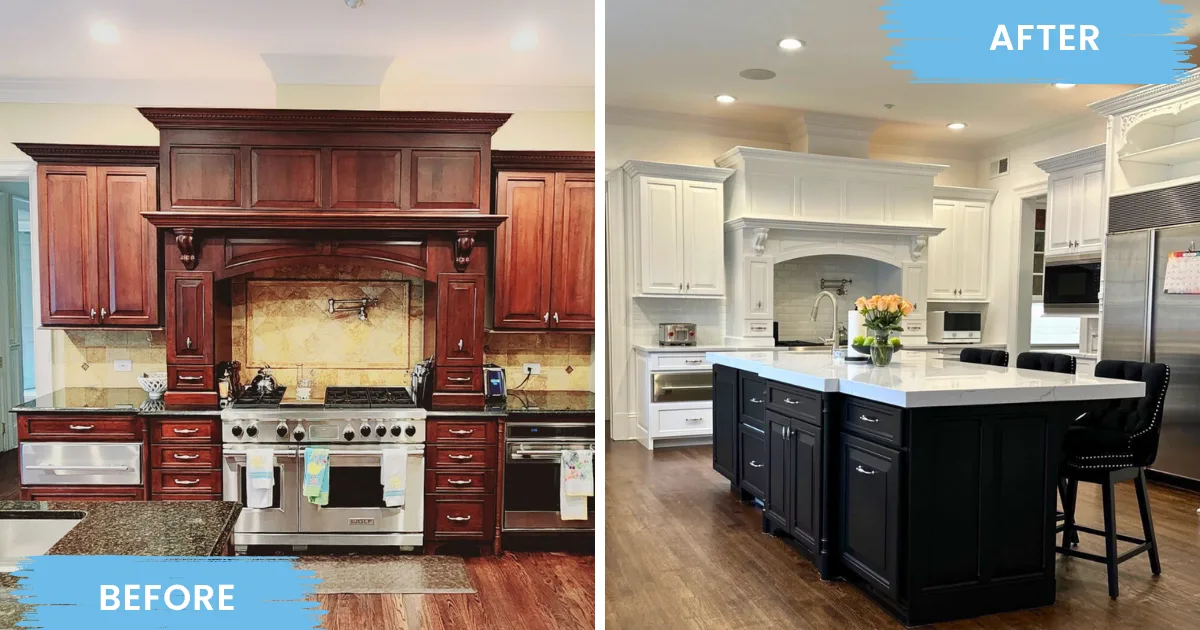
New cabinets, for example, may require wall repair and priming before installation, followed by final wall painting and touch-ups afterward. A.G. Williams explains several kitchen-specific scenarios in Kitchen Painting: Walls or Cabinets First?.
Have the painter, flooring installer, cabinet company, and carpenter agree on the order before the schedule is finalized.
Decide what comes off the walls
An empty house makes it easier to see what the previous owners left behind:
- Anchor holes
- Old picture hooks
- Uneven patches
- Scuffs
- Wallpaper seams
- Adhesive residue
- Marks behind mirrors or artwork
- Discoloration behind furniture
Remove artwork, mirrors, shelves, curtain rods, television mounts, and other hardware before painting. Decide which holes should be filled and which locations will receive new hardware later.
If a wall will need blocking for a television, shelving, or a heavy mirror, resolve that before the wall is repaired and painted. Install final hardware after the paint has dried sufficiently, and avoid placing tape or adhesive on a fresh finish.
Wallpaper should be treated as its own preparation step rather than an ordinary coat of paint. Loose edges, seams, texture, and adhesive can all show through the finished surface. At A.G. Williams, wallpaper removal, wall repair, and repainting are handled as one coordinated scope.
Use the empty house to reach difficult surfaces
Some areas are inexpensive to paint while the house is empty and frustrating to revisit later.
Consider including:
- Closet interiors and shelving
- Stair halls and landings
- Ceilings
- Inside faces of doors
- Door casings and baseboards
- Walls behind appliances
- Walls behind built-ins
- Areas that will be covered by permanent furniture
The key is accessibility. A wall behind a refrigerator or built-in can only be painted properly if the item is removed or has not yet been installed. Ask for those surfaces to be identified and priced rather than assuming they are automatically included.
Leave time for paint to dry and cure
Dry time and cure time are different.
Dry time is how long paint takes to become dry to the touch. Cure time is how long it takes to reach its intended hardness and performance. Sherwin-Williams explains that latex and acrylic paints typically dry in one to two hours but may take two to three weeks to cure. Oil-based products may take five to 15 days to cure.
The product label and actual conditions always control, but the practical lesson is the same: a wall can look finished and still be vulnerable to friction.
To protect the work during the move:
- Finish painting several days before the moving truck arrives whenever possible.
- Keep boxes and furniture from rubbing against the walls and baseboards.
- Lift furniture instead of sliding it.
- Avoid washing or scrubbing freshly painted walls.
- Do not place tape or adhesive on uncured surfaces.
- Ask for labeled touch-up paint for every room, color, and sheen.
This does not mean the house must remain empty for the entire cure period. It means the move should be planned with care while the finish continues to harden.
Ventilate while the house is still empty
Paints, varnishes, and other household products can release volatile organic compounds, or VOCs, into the air. The EPA notes that concentrations of many VOCs are higher indoors than outdoors and recommends increasing ventilation while using products that emit VOCs.
Follow the product label and the contractor’s instructions. Where conditions allow, ventilate the home during and after painting so the air has time to clear before the household moves in. Fans, open windows, and dehumidification may help with airflow and drying, but they do not eliminate the need to follow product-specific instructions.
A home that no longer smells strongly of paint is not necessarily fully cured. Odor is not a reliable substitute for the manufacturer’s drying and curing guidance.
Complete a final walkthrough before the movers arrive
Schedule the final walkthrough while the house is still empty.
Look closely at:
- Wall color and sheen
- Ceiling lines
- Trim and door edges
- Stair halls
- Closet interiors
- Areas behind doors
- Repaired surfaces
- Fixtures and switch plates
- Any areas that were supposed to remain unpainted
Confirm that touch-ups are complete, leftover paint is labeled, and the moving team knows which walls and surfaces need extra protection.
Take photographs of the finished colors and keep the paint information with your home records. Years from now, that information will be more useful than trying to match a color from memory.
What painting before moving in does not solve
Painting before moving in makes the work easier, but it does not solve every problem.
It does not correct active leaks, moisture damage, failing plaster, wood rot, or structural movement. Those conditions need to be addressed before painting.
It does not eliminate moving damage. Corners, stair halls, door casings, and baseboards can still be marked by furniture and boxes.
It does not shorten the cure period. The finish continues hardening according to the product and the conditions in the home.
It does not make color selection automatic. Samples still need to be viewed against the actual finishes and in the actual light.
How A.G. Williams handles a move-in painting project
A.G. Williams Painting Company has been family-owned since 1906 and has painted homes throughout Westchester County, the lower Hudson Valley, and Fairfield County.
For a move-in project, a field supervisor walks the home with you while it is still empty. The rooms, colors, surface conditions, repairs, trade sequence, and move date are reviewed together. The written proposal separates preparation, painting, and optional repairs so you know what is included before work begins.
The project is then scheduled backward from the date the house needs to be ready. Once work begins, homeowners have direct phone numbers for the field supervisor and crew leader, and every residential painting project is backed by the company’s 5-year warranty on workmanship.
Frequently asked questions
Is it better to paint before or after moving in?
Before, whenever the schedule allows it. An empty house gives the crew full access to walls, closets, stair halls, baseboards, and areas that will later be blocked by furniture.
How long should paint dry before furniture comes in?
Latex and acrylic paint may be dry to the touch within one to two hours, but they can continue curing for two to three weeks. Follow the product label and protect the walls from friction, boxes, tape, and furniture during the early part of that period.
Should flooring be installed before painting?
A.G. Williams generally recommends completing flooring before painting because installation can damage finished walls and baseboards may need adjustment. The sequence can change for hardwood refinishing, new cabinets, and major construction, so all trades should coordinate the schedule.
Does a pre-1978 home require special preparation?
If paid work will disturb painted surfaces, the contractor may need to comply with the EPA’s Renovation, Repair and Painting Rule. Ask whether the firm is EPA-certified and how lead-safe practices will be handled.
Can we choose colors before closing?
You can narrow down your choices, but test the finalists in the actual home. View samples against the flooring and other permanent finishes throughout the day under both natural and artificial light.
Should closets and areas behind appliances be painted?
They can be, but only if they are accessible. Include those surfaces in the written scope before appliances, built-ins, and furniture are installed.
Schedule a move-in painting walkthrough
If you have a closing date and a moving date, the useful next step is a walkthrough of the empty house. A.G. Williams can help document the scope, sequence, colors, and preparation required to complete the work before the moving truck arrives.
Request an interior painting proposal from A.G. Williams Painting Company.