The most expensive renovation in a house is rarely the one that returns the most money.
That can be surprising for homeowners who assume a major kitchen, luxury bathroom, or large addition is automatically the best way to increase resale value. In reality, home upgrades that add value tend to be more focused. They improve what buyers notice first, correct visible wear, and bring the property up to the standard buyers expect for the neighborhood.
That distinction matters throughout Westchester, Rockland, Putnam, Dutchess, and Bronx counties in New York, as well as Fairfield County, Connecticut. Many homes in these areas are older, architecturally distinctive, and already built with materials worth preserving. In those cases, restoring a tired surface may make more financial sense than replacing it.
National remodeling research reinforces the same lesson: when resale is the goal, visible and condition-driven projects often outperform dramatic renovations.
What the Cost Recovery Data Says About Home Improvements
The annual Cost vs. Value Report from Zonda compares the average cost of remodeling projects with the estimated value those projects add at resale.
Its 2025 national rankings make the pattern especially clear.
Garage door replacement ranked first, with an estimated 267.7% of project cost recouped. Steel entry door replacement followed at 216.4%, manufactured stone veneer at 207.9%, and fiber-cement siding replacement at 113.7%. A minor kitchen remodel ranked fifth at 112.9%.
Those percentages should not be interpreted as a guarantee that spending $1 automatically produces more than $1 of appraised value. They are national estimates based on standardized projects and real estate professional input. Local market conditions, the property's starting condition, design choices, and comparable homes all matter.
But the broader lesson is useful: curb appeal, maintenance, and targeted updates tend to beat large-scale luxury remodeling when resale return is the priority.
The National Association of Realtors' Remodeling Impact research tells a similar story. In its 2025 report, 50% of Realtors surveyed recommended painting the entire home before selling, while 41% recommended painting at least one interior room.
So where should homeowners consider putting their money?
1. Replace or Refresh a Worn Garage Door
For many homes, especially Colonials, raised ranches, and newer suburban properties, the garage door is one of the largest uninterrupted surfaces visible from the street.
A faded, dented, or dated door can make the entire exterior feel tired. A clean, well-proportioned replacement immediately changes that first impression.
That helps explain why garage door replacement topped Zonda's 2025 rankings.
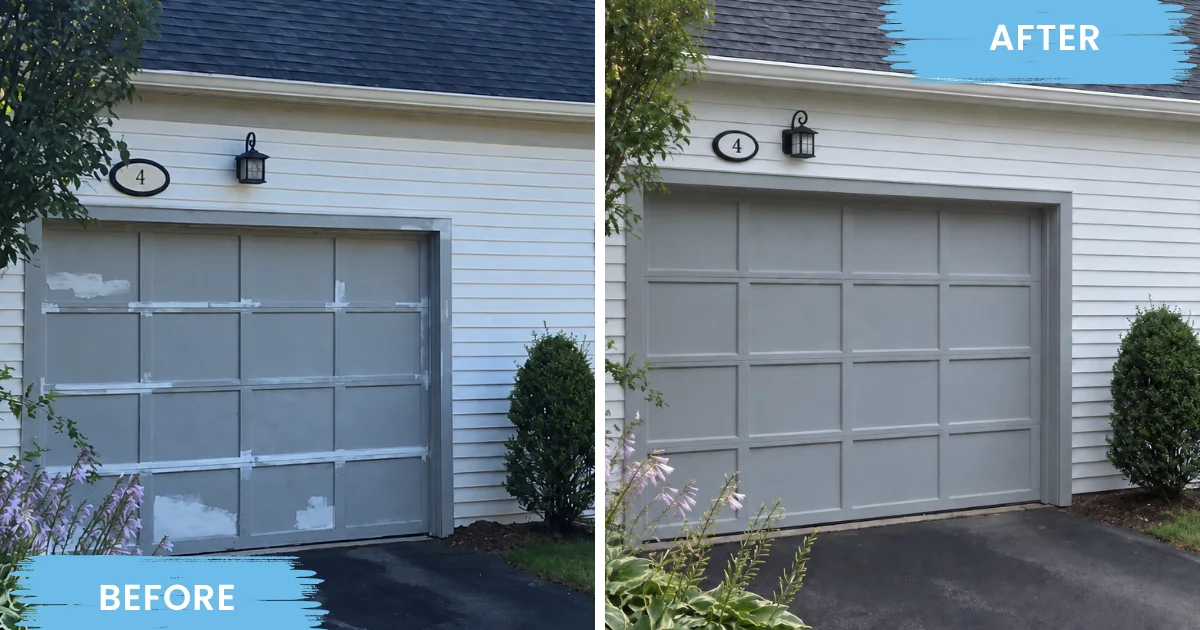
Replacement is not always necessary, however. If the door itself is in good condition, cleaning, hardware updates, trim repairs, and a fresh exterior coating may provide enough visual improvement to bring it back into balance with the rest of the house.
The goal is not simply to install something new. It is to remove an obvious sign of wear before it becomes the first thing a buyer notices.
2. Improve the Front Door and Entry Surround
The front entry gets an outsized amount of attention because buyers see it twice: first in listing photos and again while standing at the door waiting to enter.
Zonda ranked steel entry door replacement second nationally in 2025, while the National Association of Realtors also found strong cost recovery for new steel and fiberglass doors.
But the door slab is only part of the picture.
Look at the entire entry:
- Door and hardware
- Casing and trim
- Sidelights
- Porch ceiling
- Railings
- Threshold
- Steps
- Nearby siding or shingles
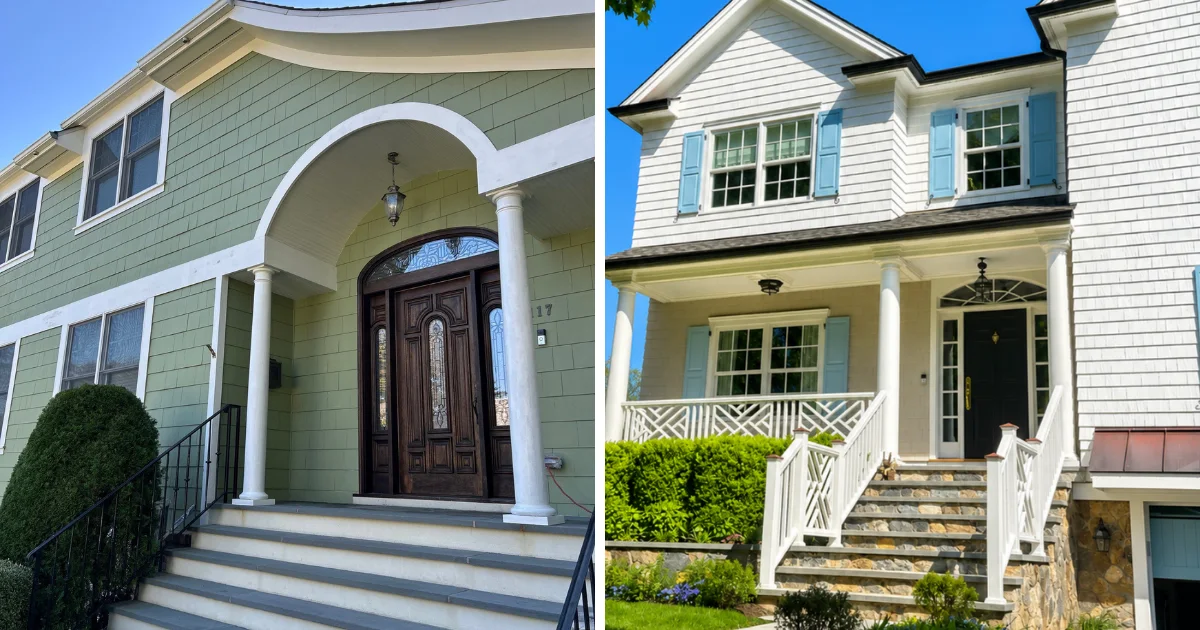
Installing an expensive new door inside a peeling or deteriorated surround weakens the effect. In many older homes, repairing the woodwork and repainting the complete entry can create a more finished result.
Color matters too, although homeowners should be wary of one-size-fits-all advice.
Recent Zillow research on front door colors found that the best-performing color depended heavily on the home's exterior. Charcoal gray performed well on dark red brick, for example, while light blue-green performed especially well on solid white homes. The research also found that some colors could hurt perceived value when paired with the wrong exterior.
The takeaway is simpler than chasing a single "best" front door color: choose a door color in the context of the siding, masonry, trim, and architecture around it.
3. Repair and Recoat Exterior Siding and Trim
Siding replacement performs well in national cost-recovery studies because buyers respond to an exterior that looks protected and maintained.
But "replace the siding" is not automatically the right answer.
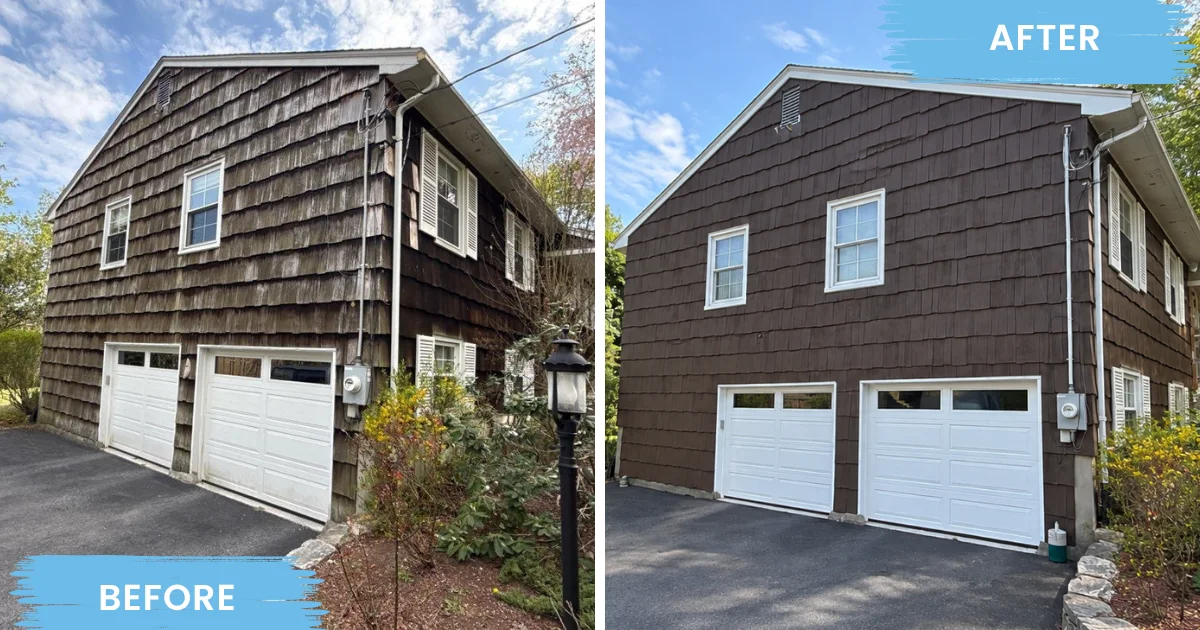
Many homes in Westchester, Fairfield, Rockland, Putnam, Dutchess, and the Bronx have wood siding, cedar shingles, detailed trim, porch components, or other exterior materials that can remain in service for years when properly maintained.
If the substrate is still sound, professional preparation and repainting can restore much of the visual impact of replacement without removing good material.
That is particularly important with wood.
Peeling paint is rarely improved by simply applying another coat. Failed paint may indicate that the existing coating has lost adhesion, caulk has opened, bare wood has been exposed, or moisture has reached trim and siding.
A professional exterior scope may include washing, scraping, sanding, spot priming, caulking, minor carpentry, and finish coating.
According to Sherwin-Williams' surface preparation guidance, inadequate preparation can be responsible for a large share of coating failures because adhesion depends on the condition of the underlying surface.
That is why preparation is not an optional step hidden underneath the "real" painting. Preparation is what gives the finish a chance to last.
4. Choose a Minor Kitchen Update Before a Gut Renovation
A kitchen absolutely matters to buyers. The question is how much work the room actually needs.
Zonda's 2025 research ranked a minor kitchen remodel among the five highest-return projects nationally. Large renovations generally have a harder time recovering their full cost because so much of the budget goes toward structural work, new cabinetry, plumbing changes, appliances, electrical work, and highly personal finish selections.
If the kitchen layout already functions well, consider a smaller scope.
That might include:
- Cabinet refinishing
- New hardware
- Updated wall color
- New countertops
- A replacement sink and faucet
- Lighting updates
- Backsplash replacement
- Repairing damaged trim
The goal before resale is usually not to build someone's dream kitchen. It is to make the existing kitchen feel clean, current, functional, and cared for.
There is also an important neighborhood consideration. Spending $150,000 on a kitchen does not automatically add $150,000 to the value of a house. Buyers still compare the property with other homes nearby.
The strongest project is usually the one that brings the kitchen up to the market, not far beyond it.
5. Refinish Cabinets Instead of Replacing Sound Cabinetry
Cabinets dominate the visual field in most kitchens, which makes them a logical place to look for improvement.
They are also expensive to replace.
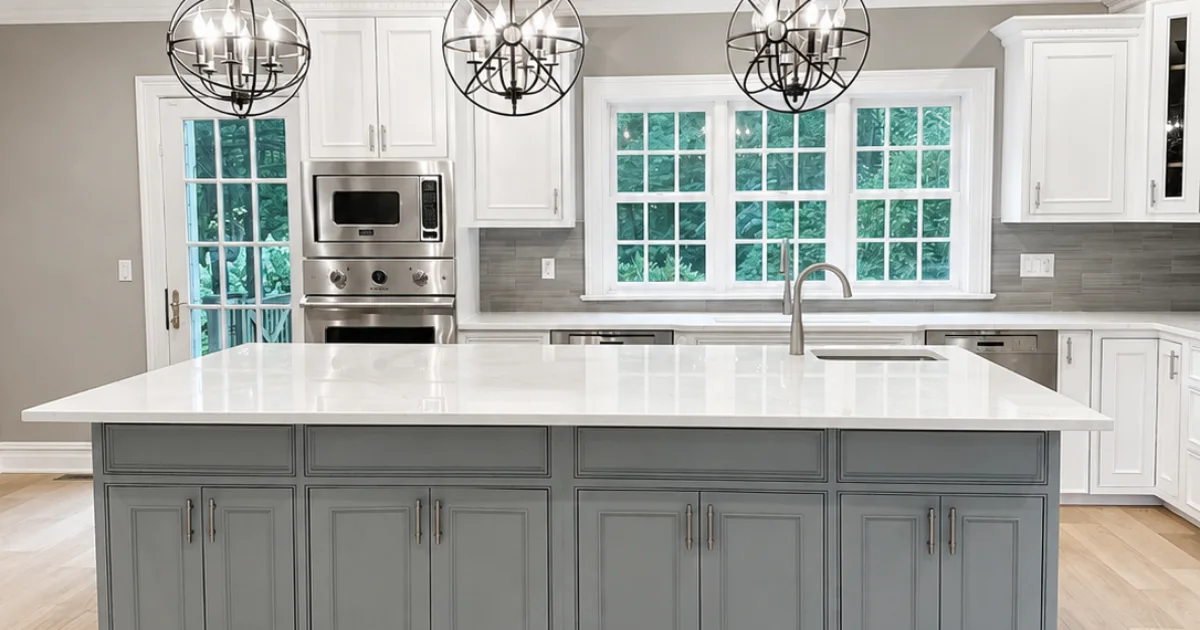
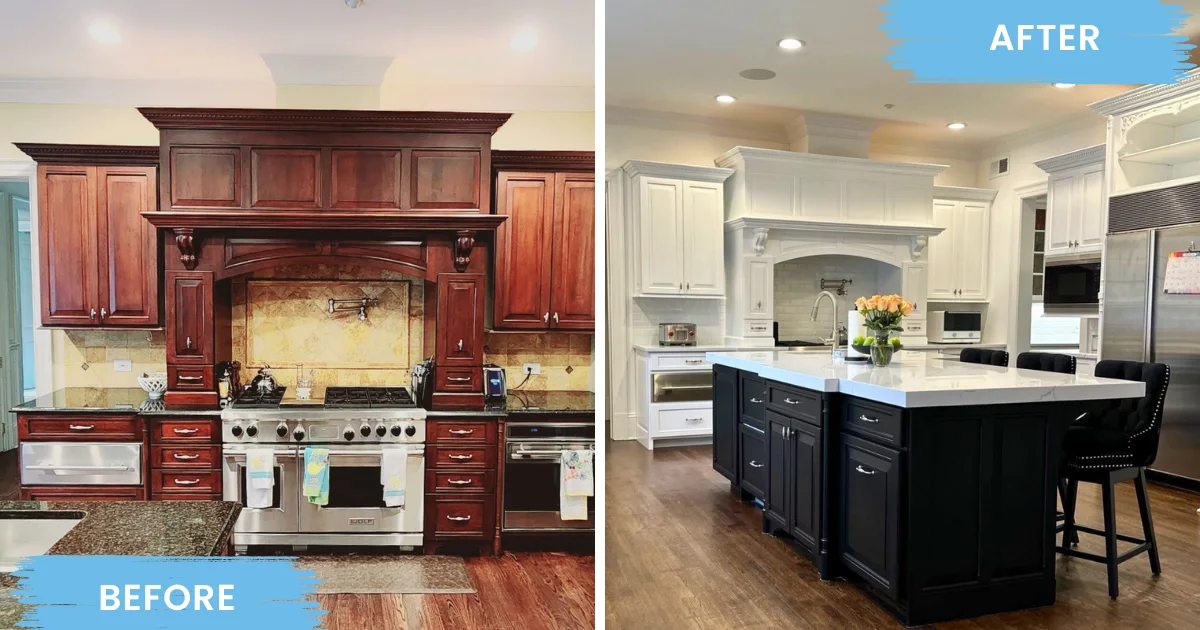
If the boxes are structurally sound and the layout works, cabinet refinishing can deliver a substantial visual change without tearing out an otherwise functional kitchen.
Refinishing can be especially useful when the issue is primarily cosmetic: dated stain, a color that no longer works with the room, normal wear, or cabinet fronts that make the kitchen appear older than it is.
It also gives homeowners flexibility. Cabinet color can be coordinated with existing countertops and floors rather than forcing several other materials to be replaced at the same time.
The decision starts with condition. Cabinets with major structural damage, failing boxes, or a badly dysfunctional layout may warrant replacement. Sound cabinets that simply look dated are a different situation.
When the underlying material is worth keeping, refinishing can be the more efficient upgrade.
6. Refinish Existing Hardwood Floors
Hardwood flooring is another example of a material that does not necessarily need to be replaced simply because it looks worn.
Older homes throughout southern New York and Fairfield County frequently have hardwood that has accumulated scratches, fading, worn finish, or years of traffic while remaining structurally sound.
Refinishing can restore those floors while preserving material already matched to the house.
The same principle applies if carpeting has been installed over existing hardwood. Before automatically replacing carpet with a new flooring product, it can be worth determining what is underneath.
For sellers, consistent flooring also helps visually connect rooms. Multiple unrelated flooring materials can make a house feel more fragmented, while restored hardwood can create a cleaner transition from one area to the next.
As with painting, the return comes partly from what buyers no longer see: wear, damage, neglect, and another project waiting for them after closing.
7. Use Interior and Exterior Paint Strategically
Painting is not the most expensive improvement on this list, but it may affect more of what a prospective buyer sees than almost any other project.
That is one reason Realtors surveyed in the 2025 Remodeling Impact Report ranked painting the entire home and painting an individual room as the two projects they most frequently recommended before listing.
Professional paint can improve:
- Overall cleanliness
- Perceived maintenance
- Light distribution
- Room-to-room consistency
- Trim definition
- Curb appeal
- Listing photography
- The appearance of repaired walls and ceilings
It is important, however, to understand what painting does and does not do.
A gallon of paint does not come with a guaranteed increase in market value. Buyers and appraisers do not simply add a fixed dollar amount because a room was painted.
Instead, paint affects the overall condition and presentation of the property. It can eliminate a visible maintenance issue, make other finishes look better, reduce buyer objections, and help a property compare more favorably with similar homes that are already move-in ready.
We have written previously about how painting can influence a home's value, and the central principle still applies: the value of paint is often in the condition it creates rather than in the cost of the paint itself.
Cost Is Not the Same Thing as Added Home Value
This distinction prevents a lot of expensive mistakes.
Cost recovery asks: How much of the money spent on a project might come back at resale?
Added or contributory value asks: How much more is the market willing to pay for the property because that improvement exists?
They are not the same number.
Suppose two similar homes are selling in the same neighborhood. One owner installs exceptionally expensive custom finishes far beyond what comparable properties offer. Those finishes may be beautiful, but buyers may not pay enough extra to reimburse the owner for the full cost.
Appraisers also evaluate properties in relation to comparable homes and market-supported differences in condition and quality. They do not simply total renovation receipts.
This is why over-improvement is such an important concept when deciding which home upgrades add value.
A good question to ask before a major project is:
Am I correcting something buyers expect to be corrected, or am I building something far beyond what similar homes offer?
The first is often a stronger resale strategy.
Deferred Maintenance Can Cost More Than the Repair
Maintenance deserves its own place in the value conversation because delaying it can change the nature of the project.
Peeling exterior paint is a good example.
Caught early, the scope may involve scraping, sanding, spot priming, caulking, and recoating. Left exposed through repeated seasons, moisture can damage trim, siding, sills, or other wood components.
Now the painting project begins with carpentry.
In other words, deferred maintenance can cost twice: once through deterioration and again through the larger repair needed to restore the surface.
Older homes also require special attention to painted surfaces.
Federal FHA appraisal guidance addresses defective paint on homes built before 1978 because of potential lead-based paint hazards. Peeling, chipping, scaling, or otherwise defective coatings may require additional attention under applicable FHA and EPA requirements.
For homeowners preparing an older home for sale, that makes failed paint more than a curb-appeal problem. Depending on the financing involved, it can become a transaction issue as well.
A.G. Williams Painting Company is EPA Lead-Safe Certified and works with the additional preparation and containment requirements that may apply to older painted surfaces.
Home Upgrades That May Not Pay Back Before a Sale
Not every improvement needs to generate a financial return. If you plan to stay in the house for 15 years and have always wanted a pool or luxury primary suite, enjoyment has value too.
But homeowners preparing to sell should be more selective.
In-ground pools
A pool may be highly desirable to the right buyer, but it is also climate- and buyer-dependent. In the Northeast, the swimming season is relatively short, and maintenance, safety, insurance, and winterization may be viewed as additional obligations.
Install a pool because your household wants one—not because you assume every future buyer will pay you back for it.
Sunrooms and specialized additions
An addition can be valuable when it solves a genuine space problem and is constructed to the same standard as the rest of the home.
Specialized rooms can be harder to justify when their cost is high, their use is narrow, or buyers do not value the space the same way the owner does.
Garage conversions
Converting a garage may create useful space for the current household, but it also removes covered parking and storage.
In neighborhoods where garages are common, that trade can work against resale.
Removing bedrooms
Turning two bedrooms into one oversized room might improve daily life for one household but reduce the number of buyers searching for the property later.
Bedroom count remains an important way buyers compare homes.
Finishes far above the neighborhood
Premium finishes can absolutely improve a house. The problem begins when the level of investment is far beyond nearby comparable properties.
If neighboring homes typically have attractive midrange kitchens, a highly customized luxury kitchen may still sell the home—but not necessarily for enough additional money to recover what it cost.
Why Surface Preparation Matters to Home Value
If painting is part of the improvement plan, quality is more important than simply changing the color.
Poorly prepared paint that begins peeling shortly after the project is completed can turn an asset back into a maintenance problem.
Sherwin-Williams' preparation guidance emphasizes that surfaces should be sound, clean, dry, and free of loose or peeling material before coating.
Its exterior painting guidance also notes that exterior paint commonly lasts roughly seven to ten years, depending on factors such as climate, substrate, preparation, and product quality.
On an exterior, proper preparation may involve:
- Washing
- Scraping loose coatings
- Sanding edges smooth
- Repairing damaged wood
- Replacing failed caulk
- Priming bare areas
- Allowing surfaces to dry properly
- Applying products suited to the substrate and conditions
Interior preparation may include patching dents and cracks, sanding repairs smooth, priming repaired areas, protecting floors and furnishings, and creating clean transitions at ceilings, trim, and adjacent colors.
Much of this work disappears once the finish coat is applied.
That does not make it less important. It is precisely what helps the finished work continue to look good after the listing photos are taken.
How A.G. Williams Painting Company Approaches Value-Driven Painting
A.G. Williams Painting Company has been family owned since 1906 and serves residential clients throughout Westchester, Rockland, Putnam, Dutchess, and Bronx counties in New York and Fairfield County, Connecticut.
Whether the goal is to prepare a property for sale or maintain a home you plan to keep, the process begins with understanding the condition of the existing surfaces.
If trim needs repair before paint, that should be identified before coating begins. If cabinets are good candidates for refinishing rather than replacement, the scope should reflect that. If an exterior needs additional preparation to support a durable finish, that work belongs in the plan from the beginning.
Our residential painting services are built around careful preparation, protection of the property, professional application, and clear project communication.
A.G. Williams Painting Company employs professional painting crews, is EPA Lead-Safe Certified, and backs applicable residential painting work with a 5-year warranty on workmanship, subject to the terms of the written proposal.
The purpose is not to recommend the largest possible project. It is to define what the house actually needs and complete that work correctly.
Frequently Asked Questions About Home Upgrades That Add Value
Which home upgrades add the most value?
Current national cost-recovery research favors visible exterior improvements. Garage door replacement, entry door replacement, manufactured stone veneer, and siding replacement all ranked near the top of Zonda's 2025 Cost vs. Value Report. Minor kitchen remodeling was the highest-ranking interior project in the top five.
Actual return varies by home, neighborhood, project condition, and local market.
Does painting a house increase its appraised value?
Painting does not normally receive a predetermined dollar credit simply because the work was completed.
Instead, fresh, properly executed paint can improve overall property condition, eliminate visible deferred maintenance, strengthen curb appeal, and help the house compare more favorably with competing properties.
That can influence marketability and value even when "new paint" does not appear as its own line item on an appraisal.
Does peeling exterior paint affect a home sale?
Yes, potentially.
At minimum, peeling paint signals deferred maintenance. On older homes it can also expose wood and allow additional deterioration.
For some FHA-financed transactions involving pre-1978 homes, defective paint is also addressed under lead-based paint requirements. Sellers of older properties should review current lender, HUD, and EPA requirements when preparing for a transaction.
Is it better to replace kitchen cabinets or refinish them?
If the cabinet boxes are sound and the kitchen layout functions well, refinishing may provide most of the visible transformation at substantially less disruption than full replacement.
Replacement makes more sense when cabinetry is structurally failing or when the layout itself needs to change.
Should I paint before selling or let the buyer handle it?
If the existing paint is worn, heavily personalized, damaged, or inconsistent, painting before listing is often worthwhile.
NAR's 2025 remodeling research found that Realtors recommended painting the entire home more frequently than any other pre-sale remodeling project measured, followed closely by painting an individual interior room.
Fresh paint can make the house feel maintained and move-in ready while improving how rooms photograph.
What should I fix first before putting my house on the market?
Start with visible maintenance problems before optional upgrades.
Look for peeling exterior paint, rotted trim, damaged doors, worn floors, cracked or stained walls, deteriorated caulk, and other signs that suggest the next owner will immediately have work to do.
Once the condition issues are handled, consider targeted cosmetic improvements that fit the expectations of buyers in your neighborhood.
Start With the House, Not a Renovation Wish List
The best home upgrades that add value are rarely chosen from a generic checklist.
They begin with the property itself.
What is visibly worn? What has reached the end of its useful life? What will buyers notice immediately? What can be restored instead of replaced? And what level of finish is appropriate for comparable homes nearby?
Answer those questions first, and renovation decisions become much easier.
If painting, cabinet refinishing, exterior preparation, or related repairs are part of your plan, request a proposal from A.G. Williams Painting Company. We can walk the property with you, identify the surfaces that need attention, and provide a clear written scope before work begins.