A wallpaper mural can look right in the listing, look right on the sample, and still be wrong at full size. Most buyers see it at full size for the first time after it is already on the wall.
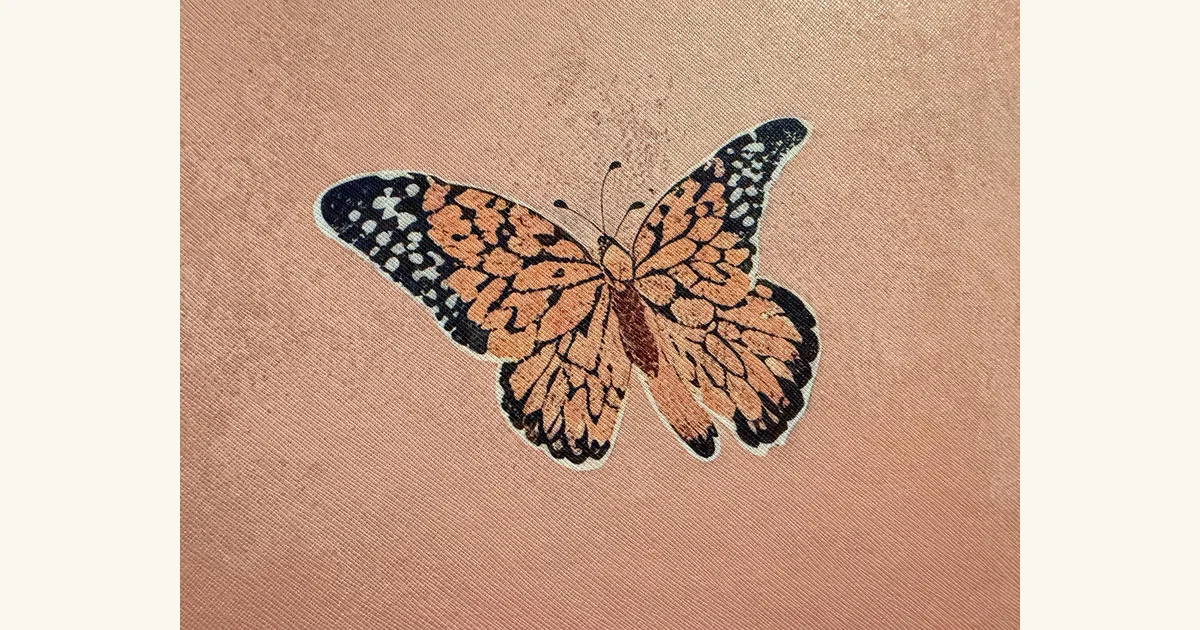
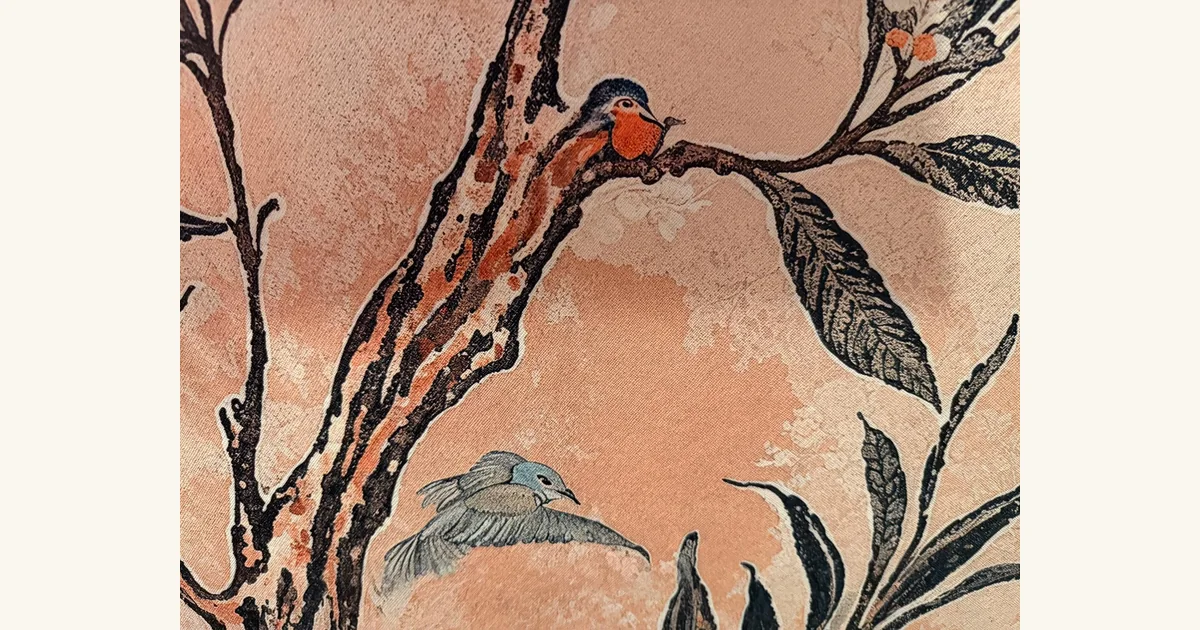
One homeowner described exactly that in a post on Reddit. They bought a mural from an online marketplace and found nothing suspicious in the product photos. The sample, which reproduced the entire mural on one small piece, looked fine. The installer was the first person to unroll the full panels, and he hung them. A few hours into the first night, one of them asked whether a butterfly on the wall had three antennae, and then whether the leaves on a tree were made of birds. The design had been generated with AI, and once they saw the first mistake, they kept finding more. From across the room the wall is still beautiful. Up close, it is several hundred dollars of material and labor they wish they could take back.
TIFU by getting AI generated wallpaper installed in my bedroom
by u/pixelperfect728 in tifu
View the original Reddit post if the embed does not load.
Nothing in that sequence was careless. The buyer checked the photos, checked the sample, and hired a professional to install it. Every check simply happened at the wrong scale. Knowing how to buy wallpaper well comes down to moving those checks to the right moment, before any paste comes out.
Why the flaws survived every check
- The listing photos were viewed on a screen, where a full wall of detail is compressed into a few inches.
- The sample reduced the whole mural to one small piece. That shows color and composition. It cannot show whether a butterfly has the right number of antennae.
- The panels stayed rolled until installation day, so the first person to see the design at full size was the installer.
The homeowner wrote that the choice of wallpaper was not the installer’s problem, and on one point that is fair. An installer does not choose the design. Manufacturers’ instructions do direct installers to check for print faults, shade variation, and mismatched batches before hanging, because claims are generally not accepted once paper is on the wall. Whether a butterfly is drawn correctly is a different kind of defect. Only the person who chose the design can judge it, which is why the final inspection has to include you.
How to buy wallpaper: seven checks before installation
1. Choose the material for the room it is going in
The material decides how the wall will clean, how it will wear, and how it will come down someday. The Lowe’s wallpaper buying guide summarizes the common options this way.
| Material | What to know |
|---|---|
| Vinyl | Durable and scrubbable; peels off easily when it is time to remove it |
| Nonwoven | A blend of synthetic and natural fibers; easy to install, clean, and remove |
| Paper | Usually easy to hang, but tears easily and is hard to clean; keep it out of high-traffic areas |
| Grasscloth | Natural texture from natural materials; stains more easily and is harder to clean |
| Flocked | Raised, velvet-like designs on a paper or vinyl backing |
| Paintable | Adds texture you can paint; the raised pattern shows through the color |
| Peel-and-stick | Less permanent and easier to apply than traditional pasted paper |
Moisture narrows the list. Heat and humidity rule some materials out of kitchens and full bathrooms. A powder room, with no shower, is the usual exception and one of the best rooms in the house for a bold paper. For a broader look at where wallpaper works and why, see our article on wallpaper benefits and types.
2. Match the pattern scale to the room
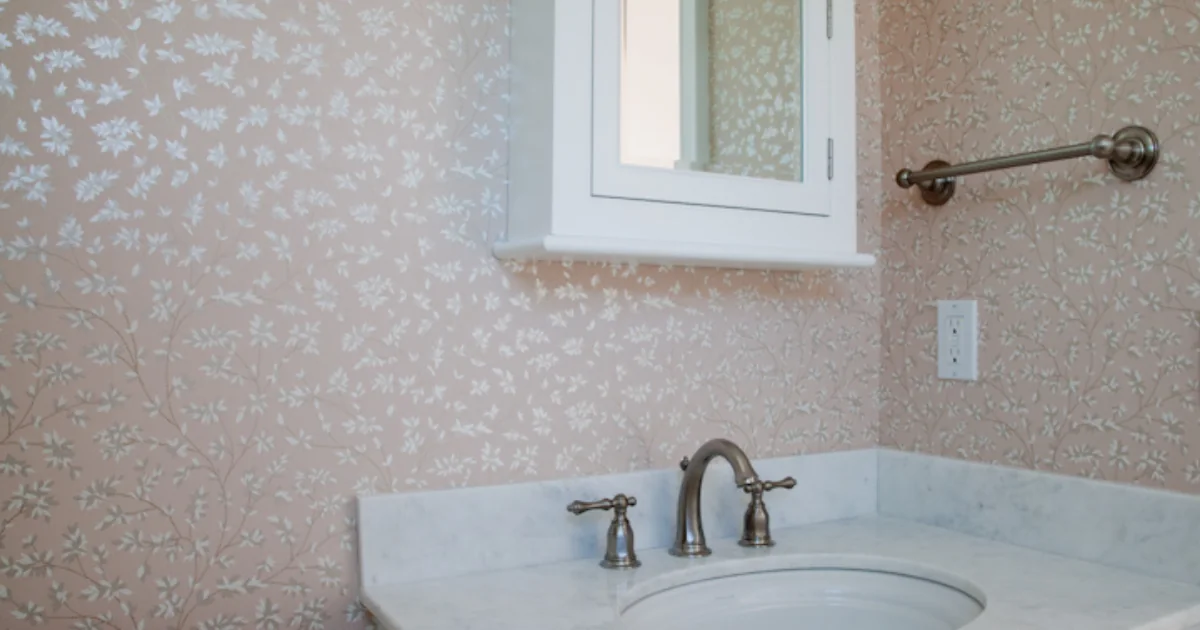
Little Greene’s guidance is that the scale of the wallpaper should generally reflect the scale of the room. Large patterns suit spacious rooms with tall ceilings. Murals and large-scale prints need a broad wall, where the whole design can be seen at once. Small, all-over motifs can look lost in a large room, but they make a small bedroom feel cozier.
Direction and contrast matter too. Vertical patterns make a ceiling look higher. Horizontal patterns make a room look wider, though Lowe’s advises against them in older homes with uneven walls or ceilings. Softly contrasting patterns are easier to live with every day. High-contrast designs make a statement, which suits a guest bath more than a bedroom you wake up in.
3. Sample in the room, at actual size
Every guide on this subject says to order a sample, because color and scale both read differently on a screen. Tape the sample to the wall it will cover. Look at it in daylight, then again at night under the lamps and fixtures you actually use.
For a mural, ask one more question: is the sample printed at actual size? A sample that reproduces the whole design on one small sheet is a color proof. It shows composition and palette, but it shrinks every detail. Ask the seller for a section printed at the size it will hang, taken from the area with the most detail: faces, hands, insects, birds, flowers, or lettering. If the seller cannot provide one, ask for the highest-resolution image they will share and review it at full zoom, one section at a time.
4. Read the pattern match and the repeat
The pattern repeat is the vertical distance before the design starts over. The match describes how each strip lines up with the next, as Dummies explains in its guide to pattern repeats.
- Random match: No alignment is needed. Grasscloth and stripes are common examples.
- Straight match: The design starts at the same point at the ceiling line on every strip and lines up straight across.
- Drop match: Alternate strips are offset, so the design runs diagonally. A half-drop repeats at the ceiling line on every other strip. A multiple drop can take four or more strips to complete the design.
Drop matches are the most complex to hang and use the most extra paper, because each strip has to align both horizontally and vertically. A larger repeat also means more waste, so it belongs in the quantity calculation as well as the design decision.
5. Calculate the quantity, then order extra
Olivia & Poppy’s guide to buying wallpaper online recommends measuring the height and width of each wall in several spots to account for irregular or sloping walls. Multiply height by width for each wall, add the walls together, and subtract windows and doors. Then adjust for the repeat.
Two details catch buyers off guard. Wallpaper is usually priced by the single roll but shipped in double rolls, sometimes called bolts, so an order arrives as half as many rolls as it lists. For a repeating pattern, Lowe’s advises rounding up to an even number of single rolls.
Order an extra roll or two beyond the calculation. It covers trimming mistakes, and it is your most reliable source for a future repair. A mural works differently: it is sold as a set of panels for one wall, so confirm the measurements with the seller before you order.
6. Keep every roll from the same run
Wallpaper is printed in batches, and each batch carries a run number or dye lot on the label. Different runs can vary slightly in print and color, and the difference shows where two strips meet. Confirm that every roll in the order carries the same number, and write it down. If you ever need more, that number is what lets the supplier match it. Manufacturers’ hanging instructions also say to keep the labels until the job is finished and you are satisfied with it.
7. Unroll and inspect before anything is hung
This is the check that would have changed the outcome of the Reddit story.
Chelsea Textiles’ hanging instructions say to inspect each roll for matching batch references, shade variation, and other faults before hanging, and state that no claim for hanging costs is accepted once more than one roll has been hung. Timorous Beasties’ instructions disclaim liability for defects in condition or matching that are apparent at the time of hanging. Once paper is pasted, a mistake costs the labor as well as the material.
Before installation day:
- Open the delivery as soon as it arrives, while there is still time to return or replace it.
- Check that every label carries the same run number.
- Unroll each roll, or at least the first full length of each, and look at the print at full size.
- Lay mural panels out in order on a clean floor and study the whole image.
- Ask your installer to review the layout with you before the first panel is pasted.
Buying a wallpaper mural online
Everything above about how to buy wallpaper applies to a mural, with higher stakes. A mural is one image enlarged to cover an entire wall, so any flaw in the image is enlarged with it. Lowe’s notes that murals work best on one large wall in a living room, dining room, or bedroom.
How to spot an AI-generated design before you buy
Northwestern University researchers who studied how to distinguish AI-generated images group the telltale errors into categories. Four apply directly to wallpaper.
- Anatomical errors: extra, missing, or merged parts on people and animals, such as limbs, wings, eyes, or antennae.
- Functional errors: objects that do not work as objects, such as branches that lead nowhere, leaves that turn into something else, or lettering that is almost readable.
- Physics errors: shadows, reflections, or perspective that contradict each other.
- Stylistic tells: an overly polished look, or areas where sharpness or lighting changes for no reason.
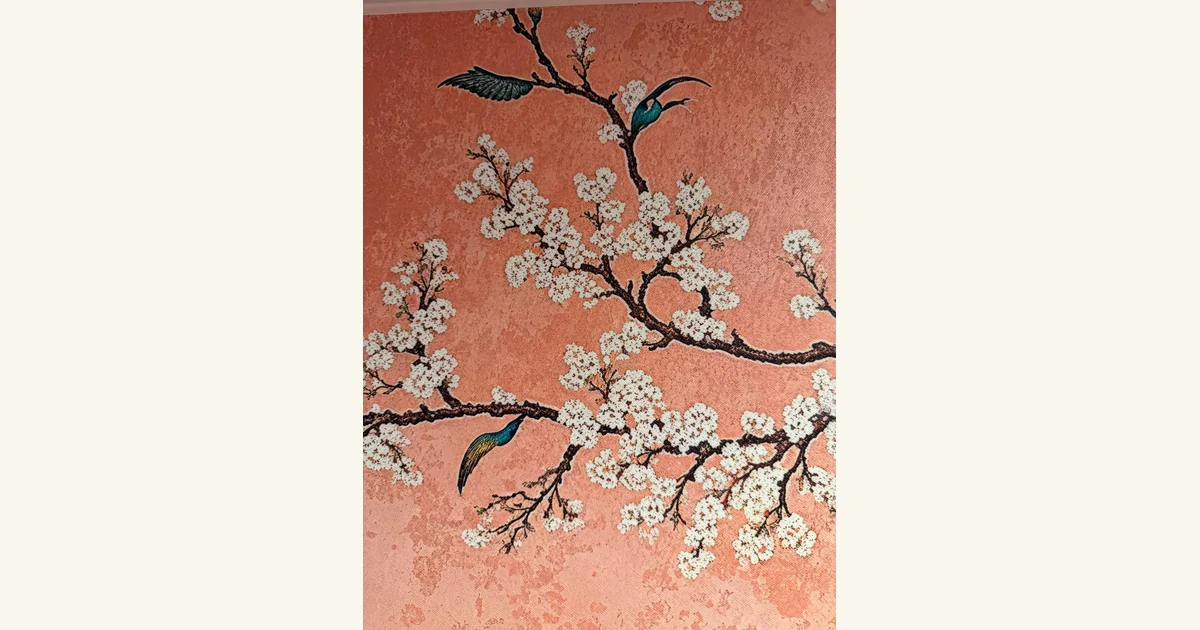
Look hardest at the parts of a design that follow rules: insects, birds, hands, faces, flowers, text, and architecture. They are where the homeowner in the story found the first mistake. The same researchers caution that these signs fade as image generators improve and that authentic images can show some of them too. Treat them as reasons to ask questions, not as proof.
Questions to ask the seller
- Who created the design, and was AI used to make it?
- Can you send a section printed at actual size?
- Is the original image large enough to print at full wall size without being enlarged?
- What is the return policy on made-to-order panels, and does it change once they are opened?
Read the full listing description as well as the photos. Some marketplaces, Etsy among them, require sellers to disclose in the listing description when an item was created with AI. Olivia & Poppy also recommends buying from reputable sites and reading customer reviews for insight into quality and durability.
If the wallpaper is already on the wall
The homeowner in the story is living with a wall that is beautiful from a distance and wrong up close. Keeping it is a reasonable choice.
If it has to go, the material helps. Most murals are printed on strippable nonwoven or vinyl, both of which Lowe’s describes as easy to remove. The wall underneath is the larger job. Removal can leave adhesive residue or damaged drywall paper, and the wall has to be repaired and primed before new paper or paint goes on. Our article on painting walls after wallpaper removal walks through that process. If the listing did not disclose AI use, send the seller and the marketplace photos of the defects either way.
Wallpaper installation with A.G. Williams Painting Company
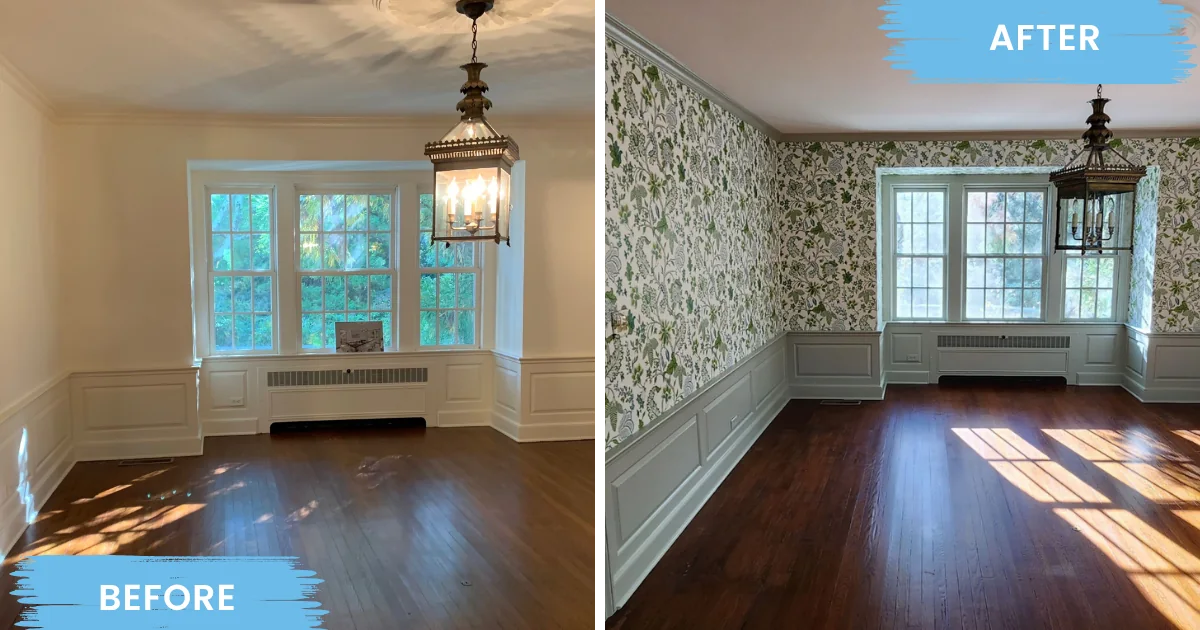
You choose the paper. Our job is to make sure it goes up the way you chose it.
A.G. Williams has been family owned since 1906. Doug Kitchen, one of our estimators, hung wallpaper for 30 years before he sold his business to A.G. Williams. He and his team review every wallpaper project to make sure the work is done to standard.
We can work with you on sourcing and buying the paper, or handle it on your behalf and provide samples for you to choose from. Either way, a field supervisor meets you for a walkthrough and reviews the wall condition, any existing paper, the pattern direction, and any painting or trim work in the same room. We measure the room and confirm the quantity.
Before the first strip goes up, the pattern is planned around corners, trim, and fixtures. If the wall needs repair, the cost is itemized in the proposal, and you approve it before work proceeds. The sequence is set with you. At closeout, we review the seams, edges, and repairs together, and you have a named contact for anything that comes up later.
If the scope includes painting the trim, ceiling, or adjacent walls, that residential painting is backed by our 5-year warranty on workmanship. For the wallpaper itself, we stand behind the work: if something is not right, we come back and fix it.
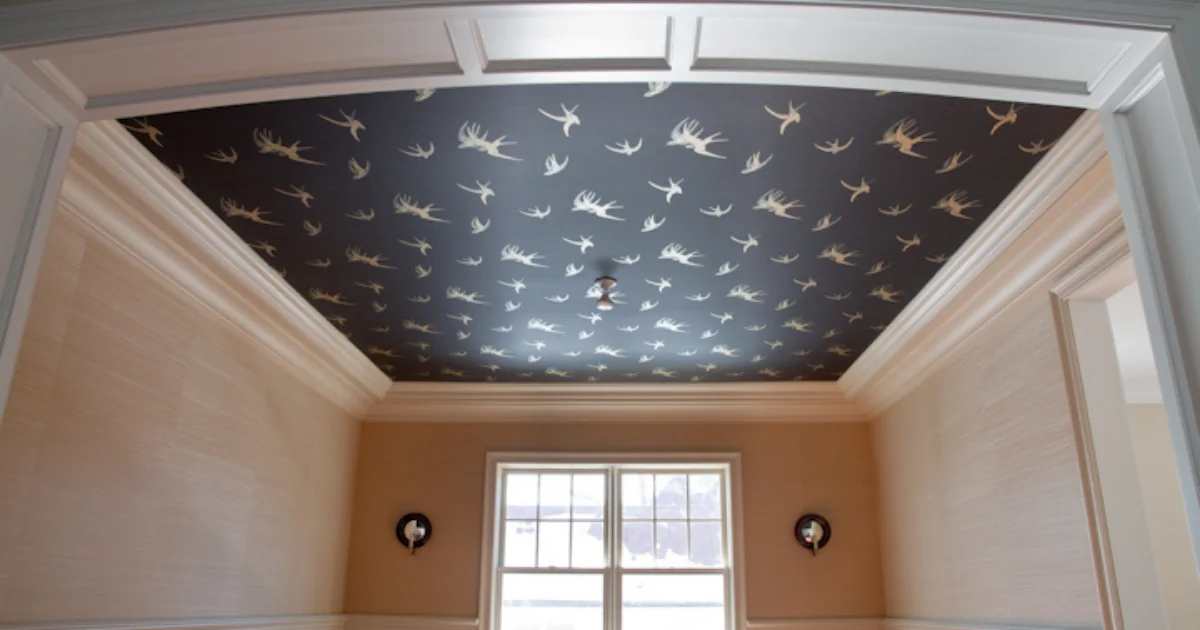
We provide wallpaper installation and removal in Westchester, Rockland, Putnam, Dutchess, and Bronx counties in New York and in Fairfield County, Connecticut, from powder rooms and accent walls to full rooms and ceilings.
Frequently asked questions
How do I know how much wallpaper to buy?
Measure the height and width of each wall, multiply, add the walls together, and subtract doors and windows. Adjust for the pattern repeat, round up to an even number of single rolls for a repeating pattern, and order an extra roll or two.
What is the difference between a straight match and a drop match?
In a straight match, the design lines up straight across from one strip to the next. In a drop match, alternate strips are offset so the design runs diagonally, which takes more paper and more care to hang.
Can I return wallpaper after it has been hung?
Usually not. Manufacturers generally do not accept claims for defects that were visible at the time of hanging, so inspect every roll or panel before installation begins.
Is a small sample enough to judge a wallpaper mural?
No. A sample that shows the whole mural on one sheet shrinks every detail. Ask for a section printed at actual size, or review the full-resolution image one section at a time.
How can I tell if a wallpaper mural was made with AI?
Look closely at details that follow rules, such as insects, birds, hands, faces, flowers, and lettering. Extra or merged parts, objects that blend into other objects, and inconsistent shadows are common signs. Ask the seller directly whether AI was used.
Schedule a walkthrough
If you are choosing wallpaper or planning an installation, contact A.G. Williams Painting Company to schedule a walkthrough. We can help confirm the wall condition, pattern layout, quantity, and installation scope before the first panel goes up.